Mary International Airport
International airport of Mary have been completely reconstructed and equipped by the newest radio engineering systems, allowing to accept aircrafts of all types on two runways:
Mary
Turkmenistan
International airport of Mary have been completely reconstructed and equipped by the newest radio engineering systems, allowing to accept aircrafts of all types on two runways:
Mary
Turkmenistan
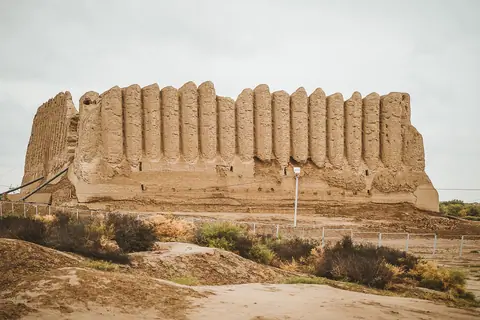
Merv is one of the oldest and historically richest cities in Central Asia, located in present-day Turkmenistan. It was founded in the 3rd century BC and became one of the largest and most important cities on the trade routes of the Great Silk Road. Merv has been an important center of culture, science, crafts and religion for many centuries.
At different times in its history, Merv was ruled by various empires, including the Parthian, Sassanid, Arab, Seljuk and Mongol empires. Each of these empires left their mark on the city, making its history rich and varied.
Mary
Turkmenistan
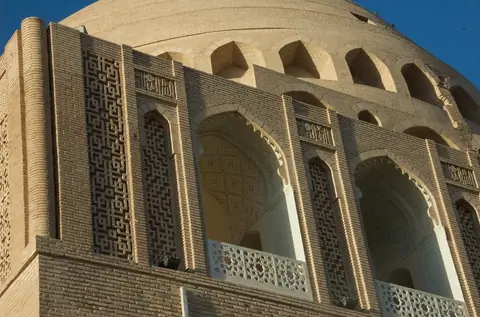
Sultan Sanjar Mausoleum is a historically significant site located in Merv, Turkmenistan. It commemorates Sultan Sanjar, a prominent ruler of the Seljuk Empire from 1097 to 1157. The mausoleum is a remarkable example of Islamic architecture from the Seljuk period, characterized by its brick structure, imposing dome, and intricate decorative elements. Merv, the city where the mausoleum is situated, has a rich history dating back to the 6th century BC and served as a vital stop along the Silk Road, facilitating trade between the East and West.
Mary
Turkmenistan
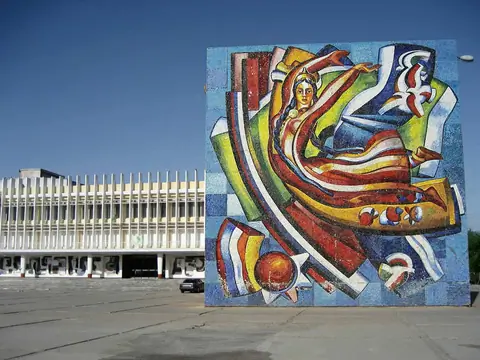
Mary is the third largest city in Turkmenistan, situated in the Karakum desert. It was an important centre on the Silk Road and the capital of a prosperous Margiana region. The city's name changed several times - Margush Maru, Margiane, Margao and Merv.
During the reign of the Turkmen Seljuk dynasty, Muslim architecture reached its apogee. At that time, the city of Merv was in an exceptional position, as an intellectual and cultural centre, a heritage from previous eras that played an important role.