Sight

Path Element
sights

Yangykala canyon

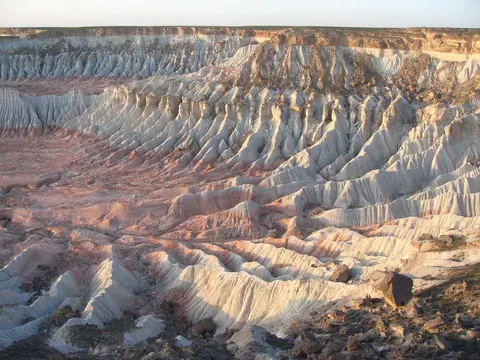
The Yangikala Canyon is one of Turkmenistan's most impressive natural wonders. Located in the northwest of Turkmenistan, east of the city of Turkmenbashi on the road connecting it to Dashoguz, this spectacular canyon is famous for its brightly colored and contrasting rock formations. The shades of red, orange, white, and yellow create a breathtaking landscape that seems almost unreal.

Yangykala
Turkmenistan

Chor Minor

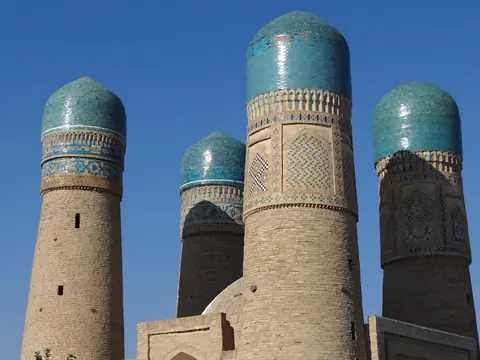
Chor Minor or Char Minar is also known as the Madrasah of Khalif Niyaz-kul. It is located in an alley northeast of the Lyab-i Hauz complex. It is protected as a monument of cultural heritage and is also part of the historic center of the UNESCO World Heritage Site of Bukhara. In Tajik, the name of the monument means "four minarets", in reference to the four towers of the building.

Bukhara
Bukhara
Uzbekistan

Aral Sea

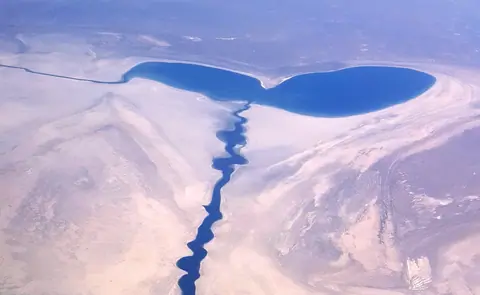
The Aral Sea is located in northern Central Asia, between Aktobe district in Kazakhstan and north of the autonomous region of Karakalpakstan in Uzbekistan. Until the third quarter of the 20th century, it was the fourth largest salt lake in the world and contained 10 grams of salt per liter. The two rivers that feed it are the famous rivers Amu Darya and Syr Darya. Two rivers originating in the mountains of Kyrgyzstan, Tajikistan and Afghanistan.

Nukus
Karakalpakstan
Uzbekistan

Kizil Thousand Buddha caves

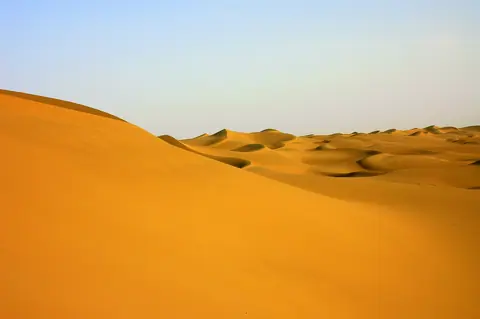
In the heart of the great Gobi Desert, like a hidden treasure, lies Kizil, thousands of Buddhist caves. This unique archaeological complex surprises with its grandeur and the mysteries stored in its depths. The caves are carved into the red rocks, forming a huge complex of sculptures and paintings representing ancient Buddhist culture.

Kucha
Xinjiang Weiwuerzizhiqu
China

Qianshi Hutong

Qianshi Hutong is a little piece of history and culture in the heart of China's capital, Beijing. Located in the traditional Hutong district, Qianshi Hutong surprises with its authentic and cozy atmosphere.

Hutongs are narrow streets and alleys characteristic of old Chinese towns, where the rhythm of daily life of the locals can be felt closely and intimately. Qianshi Hutong is no exception: here you will find ancient palaces and traditional Chinese houses that have survived more than one century and are woven into the living fabric of the urban landscape.

Beijing
Beijing Shi
China

Bezeklik cave complex

In the heart of Chinese Turkestan, like a hidden treasure, are located the Bezeklik Caves - a unique archaeological complex, rich not only in its ancient historical artifacts, but also in cultural heritage.

These rock-cut caves are home to more than a thousand ancient cobblestones and Buddha statues, reflecting the richness and diversity of Buddhist culture. In them you will find images of Buddha, bodhisattvas, apsaras and other holy personalities, made with exceptional skill.

Turpan
Xinjiang Weiwuerzizhiqu
China

Gyantse Kumbum

Jangtse Kumbum, located in Tibet, is a majestic Buddhist monastery and one of the most significant spiritual sites in the region. Its name translates to "One Hundred Thousand Images of Buddha" and it is famous for its unique steps, each of which contains an image of Buddha.

Walking past the many sacred temples and monastery halls, you feel the grandeur of the ancient culture and the deep spirituality that reigns here. Each statue, each architectural element, embodying ancient Buddhist symbols and teachings, recalls the great history and wisdom of this place.

Gyantse
Xizang Zizhiqu
China

Jiuzhaigou

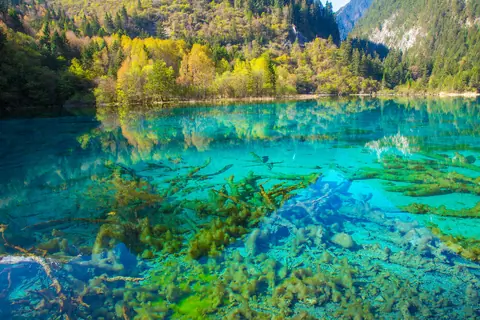
Jiuzhaigou is one of the most scenic and breathtaking places in China, famous for its magnificent mountain scenery, wildlife and cultural heritage. Located in Sichuan Province, this region attracts millions of tourists from all over the world for its amazing views, hiking trails and ancient cultural attractions.

Jiuzhaigou
Sichuan Sheng
China