Historical Site

Path Element
historical-site

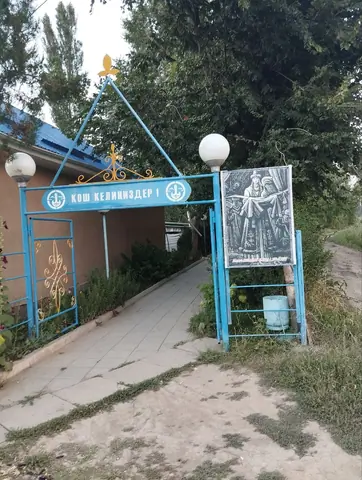
Source of Mother Kanykei

Kanykei apa bulagy is a sacred spring that carries deep symbolism and historical significance for the Kyrgyz people. According to legend, Kanykei, the wise and faithful wife of the legendary hero Manas, stopped here to quench her thirst and pray for the protection and prosperity of her people.

Talas
Kyrgyzstan
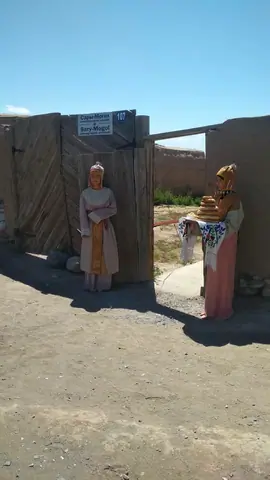
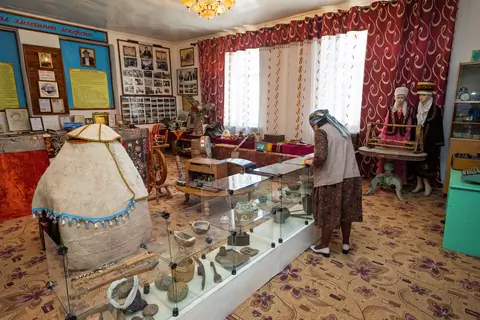
Museum Sary-Mogol

The Sary-Mogol Museum is a real gem of the Osh region, located in the picturesque village of Sary-Mogol. This ethnographic museum, founded in 1962, preserves more than half a century of history and culture of the region. The museum has about 100 unique exhibits, each of which tells its own story about the life and traditions of the people.

Sary-Mogol village
Kyrgyzstan

The ancient historic city of Nisa

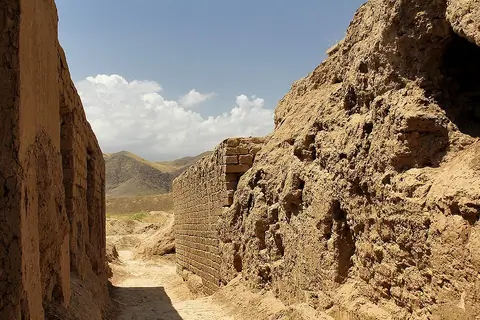
Nisa is another important archaeological complex located in Turkmenistan, not far from the modern capital Ashgabat. This ancient city was inhabited as early as the 3rd century BC and is considered one of the oldest cities in Central Asia.

In ancient times, Nisa was the capital of the Parthian kingdom, one of the great states of early antiquity that rivaled the Roman Empire in the Middle East. The Parthian king Mithridates I founded Nisa and made it his residence. Later, under the rule of his descendants, the city flourished as a center of trade and culture.

Bagyr
Turkmenistan

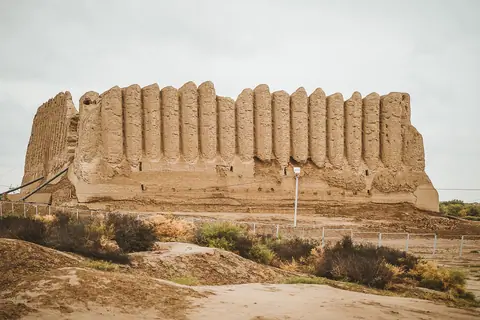
Merv is an ancient city of Turkmenistan

Merv is one of the oldest and historically richest cities in Central Asia, located in present-day Turkmenistan. It was founded in the 3rd century BC and became one of the largest and most important cities on the trade routes of the Great Silk Road. Merv has been an important center of culture, science, crafts and religion for many centuries.

At different times in its history, Merv was ruled by various empires, including the Parthian, Sassanid, Arab, Seljuk and Mongol empires. Each of these empires left their mark on the city, making its history rich and varied.

Mary
Turkmenistan

Saimaluu-Tash petroglyph

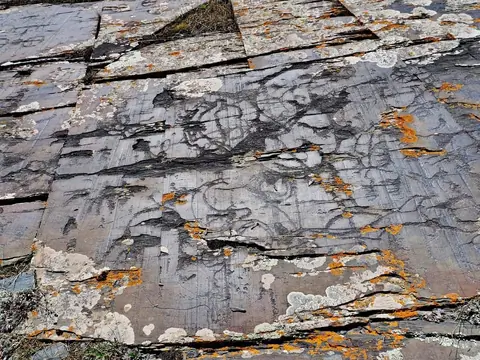
Saimalu-Tash State Natural Park. By car we go 35 km from the center of the district, we have one route, and further those who wish to ride 7 km straight, the road is not a very good trail. Petroglyve occupies a total of 7 hectares. It is located at an altitude of 3100 meters above sea level.Rock paintings were discovered in 1902 by military topographer N.G. Khludov. Their first study in 1903 was conducted by members of the Tashkent circle of amateur archaeologists. At different times the monument was investigated by I. G. Poslavsky, B. M. Zima, G. A. Pomaskina and other scientists.

Saimaluu-Tash
Kyrgyzstan

Barakan Ethnographic Museum

Museum named after Barakanov. Mukash Barakanov was the first teacher in his honor in Jeti-Oguz district in the village of Svetlaya Polyana in the school base was opened a museum named after Barakanov. The museum is dedicated to the life and activities of this outstanding teacher, who made a significant contribution to the development of education in the region.In the museum you can learn about the biography of Mukash Barakanov, his teaching methods, pedagogical ideas.

Kyzyl-Suu
Kyrgyzstan

Chiyim-Tash petroglyph in Talas village

The Chiyim-Tash petroglyph is considered one of the most significant and interesting petroglyphs on the territory of Kyrgyzstan and attracts many tourists and researchers. It is also a cultural heritage site. This ancient drawing represents one of the oldest forms of art and is an important source of information about bygone eras and the culture of ancient peoples who inhabited this territory.

Talas
Kyrgyzstan

Petroglyphs on Zhaltyrak-Tash stones

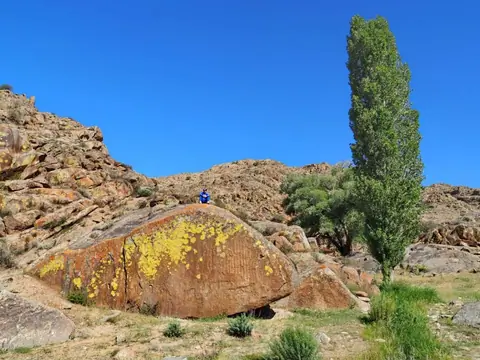
Zhaltyrak-Tash as a multi-layered monument is dated in a significant time range - from the Bronze Age to ethnographic modernity. The most ancient are considered to be animal drawings made in bitreugular style and having analogies in Saimaluu-Tash.
Wagons and chariots, anthropomorphic images, erotic scenes, etc. are attributed to the Age of the Developed Bronze Age. The most diverse is the complex correlated with the Early Iron Age, consisting of numerous animal images in the Scytho-Siberian style and having analogies in the vast Eurasian area.

Talas
Kyrgyzstan

CBT Talas museum of handrails

The museum's exposition includes bails, wristbands, badges and insignia of the CBT, as well as other items related to the history and activities of the security service. Visitors can get acquainted with the history of the organization, learn about its tasks and functions, as well as the equipment and gear used.  The Talas CBT Handrail Museum is an interesting place to visit for anyone interested in history. It offers the opportunity to learn more about the work of the staff and to see the various bails used by them in their professional activities.

Talas
Kyrgyzstan

Ala Too Square

Image
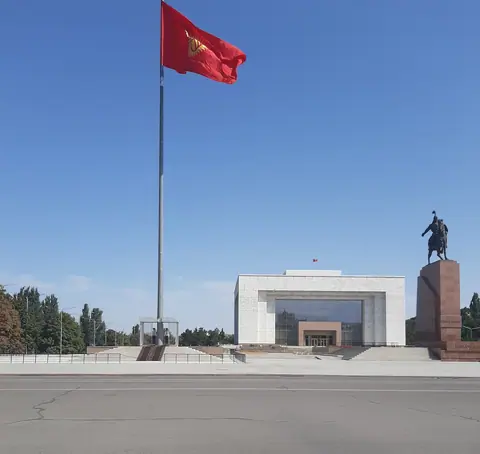
the main square of bishkek city
Height
2759
Width
2915

Ala-Too Square is the main square of Kyrgyzstan, located in the center of Bishkek. The name Ala-Too translates from Kyrgyz as "variegated mountains" and refers to the mountain range of the same name, where the mountains are "peggy" in color: partly white due to snow, partly dark in snowless areas. Ala-Too is a popular place for festivals, celebrations and holidays. Ala-Too is usually decorated with lights for Independence Day (August 31) and New Year (here the lights are complemented by a Christmas tree with traditional Kyrgyz patterns).

Bishkek
Kyrgyzstan