Caravanserai of Culture
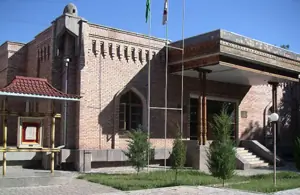
International Caravanserai of culture Ikuo Hirayama in Tashkent is a unique object, which is both a museum and a scientific and cultural center.
Tashkent
Tashkent
Uzbekistan
International Caravanserai of culture Ikuo Hirayama in Tashkent is a unique object, which is both a museum and a scientific and cultural center.
Tashkent
Tashkent
Uzbekistan
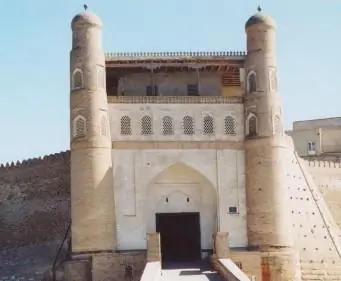
Now Arch open-air museum. In the niches at the entrance to the masters work shops, and the ramp up could be anyone, even for a horse, even on foot. Gray Wall Arch look on with indifference visitors - they have seen and heard so much - silent witnesses of the grandeur and decadence of obscurantism and the triumph of humanity, justice and cruelty.
Bukhara
Bukhara
Uzbekistan
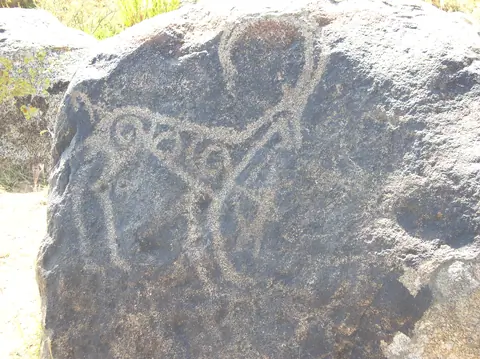
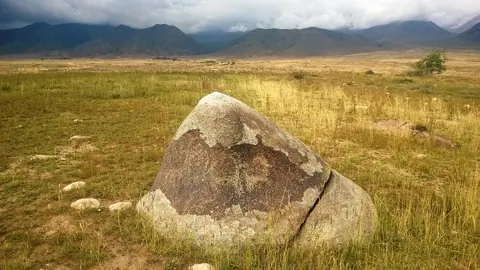
Maybe less know, petroglyphs of Ornok are of the same period than petroglyphs of Cholpon Ata. A wild open air museum, where you have to find by yourself stones drawn during bronze, iron ages, and during the early Middle Ages. There are more than 2000 stone boulders, with images of ancient hunters and animals such as the mountain goat (Ibex), deers: totemic animals of the Bugu's tribe, dogs, leopards, horses, camels.
Ornok
Kyrgyzstan
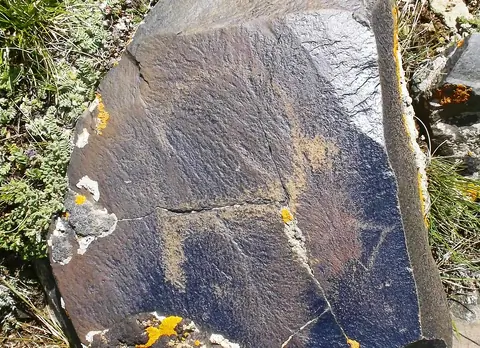
At Saimaluu-Tash there are many rocks of basalt. Paintings were drawn with iron and bronze instruments on the smooth surfaces of basalt, blackened by the sun.
The men scratched the scenes of life, hunting, displacements, ritual dances, different divinities, demonic dances, humanoid creatures with canine heads and hypertrophied arms.
Kazarman
Kyrgyzstan
Near the former airport of Cholpon Ata, you may find a large site of petroglyphs from Bronze Age and some sacred places. There are thousand of drawings. First were painted by the Andronov tribes (Andronic), the former Sintashta tribe who colonized Central Asia around 3800 year BC. They were agro-pastoral. Then, we can see paintings from Scythian's tribes (VIII-III centuries B.C.). Most of drawings show animals like ibex or deer for example.
Cholpon-Ata
Kyrgyzstan
The San-Tash burial mound, which means "counting stones" or "reading stones" in the Turkish language, is located on the bank of the Tiup River, near the eastern border post with Kazakhstan A363, at an altitude of 1996 metres alt . Most of the Scythian tombs in the vicinity are dated to the 6th to 1st centuries BC. But the stone heap remains an enigma as it is linked to a legend of Tamerlane which was used to count the number of dead soldiers during battles.
San-Tash
Kyrgyzstan
Explore the captivating Kyrgyz Creek Canyon, starting from the iconic "Red Bridge" train bridge. The canyon, carved by the Kurgan Terek River, features stunning red rock formations.
The hike to the red part of the canyon takes about an hour, following a narrow path along the river where you'll occasionally need to walk in the water. It's advisable to avoid this hike during or after rain due to potential hazards. After an hour, the canyon opens up to reveal magnificent red towers reminiscent of the Creek Canyon.
Kyzyl-Oy
Kyrgyzstan
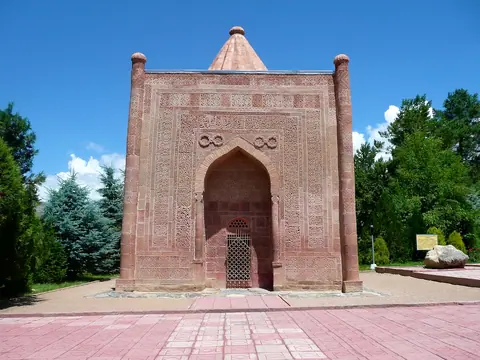
The Gumbez (Mausoleum) of Manas, a medieval architectural monument from the 14th century (around 1334), is located in Tasharyk village, at the crossroad of Kenkol valley and Talas valley, 13 km north-east of Talas. Although well known among people and in scientific literature as the Mausoleum of Manas, the inscription on the wall reads that the tomb belongs to the daughter of one of the rulers of the Chagatai Khanate, but the body of a 2 meters tall man was found in the tomb.
Talas
Kyrgyzstan
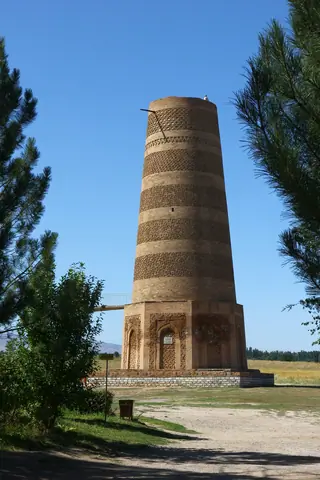
Burana Tower is seven km. far from the city of Tokmok. It is an 11th century minaret, and one of the first buildings of such type in Central Asia. The original height of minaret was 45 meters. Today the tower is 24.6 meters high, the remaining part came down during an earthquake in the 15th century. In the 10th to 12th centuries, Karakhanids khanate was a great feudal state of Central Asia and Kazakhstan.
Tokmok
Kyrgyzstan
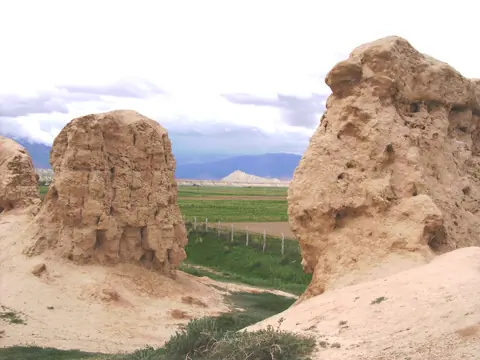
Koshoi-Korgon is a fortress located in the center of the At-Bashy Valley. It was strategically located on the Silk Road between Kashgar and the Naryn region in Kyrgyzstan.
The city is rectangular in shape from 245 to 250 m. The height of the preserved walls is 4 to 8 m.
There are 60 towers around the perimeter: 19 in the north, 13 in the south, 17 in the east and 11 in the west. The walls and towers are made of large blocks of clay and long bricks. The wall is 7 to 9 m thick on the ground and 3 to 4 m in height.
At-Bashi
Kyrgyzstan