Sacred Place

Path Element
sacred

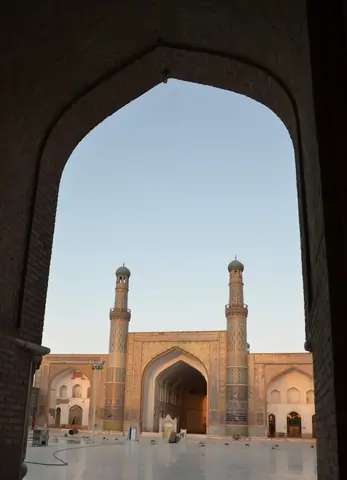
The Great Mosque of Herat

The Jami Masjid, Friday mosque, also known as the Great Mosque of Herat, is a significant historical and architectural landmark located in the Old City of Herat, Afghanistan. It is one of the oldest and largest mosques in the region and is considered a masterpiece of Islamic architecture. The mosque was built in the 12th century and has undergone several renovations and restorations over the centuries. It is well-known for its bright blue minarets, which are adorned with intricate tile work, and its large central dome which sits above the prayer hall.

Herat
Afghanistan
Stupa of Takht-e Rostam

The Stupa of Takht-e Rostam is a Buddhist stupa-monastery located in the ancient city of Takht-e Rostam in northeastern Afghanistan. The stupa is thought to date back to the 5th or 4th century AD, and it is believed to have been built during the Kushano-Sassanian period. This stupa has been carved into the ground.

Samangan
Afghanistan

Tatar mosque

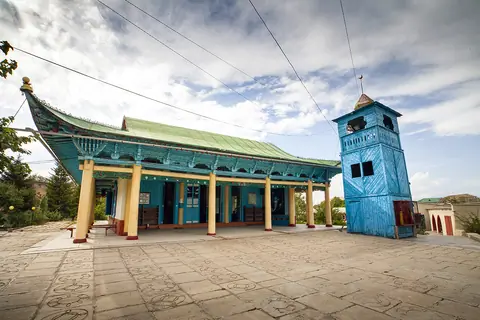
The Tatar mosque in the city of Karakol is a majestic structure that embodies the rich heritage of Tatar culture and religious heritage. This architectural monument attracts attention with its grace and architectural harmony, and also demonstrates the diversity of cultures present in this region.

Karakol
Kyrgyzstan

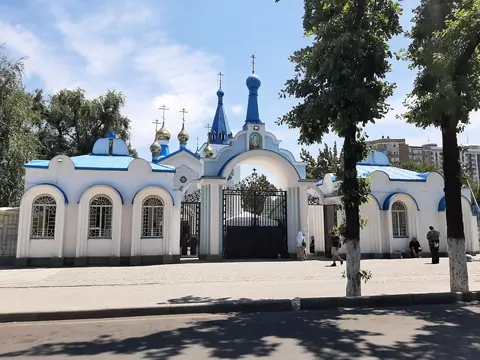
The Cathedral in Bishkek

The Cathedral in Bishkek, erected in 1941, is not only a religious symbol but also a cultural heritage reflecting the richness and diversity of the region. Its architecture combines the national motifs of Central Asia and elements of the Orthodox tradition, creating a unique and harmonious appearance.

Bishkek
Kyrgyzstan

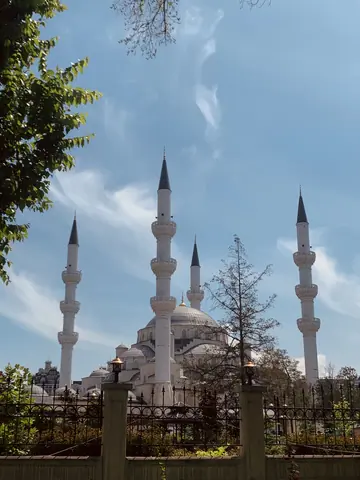
Central mosque

Image
mosque.png
Height
4032
Width
3024

The Central Mosque is the embodiment of grandeur and nobility, attracting the eyes with its majestic beauty and impressive size. Opened on September 2, 2018, this mosque has become not only a symbol of faith, but also an important cultural and architectural treasure not only for Kyrgyzstan, but for the whole of Central Asia.

Located along Zhibek Zholy Avenue, which is a modern reincarnation of the ancient Silk Road, the Central Mosque attracts attention with its majestic appearance, fitting into the historical context of the trade and cultural ties of this famous trade route.

Bishkek
Kyrgyzstan

Rukhabad Mausoleum

Image
Rukhabad Mausoleum, Samarkand
Height
1702
Width
3406

Excursions to Uzbekistan do not ignore this building in Samarkand, as it is one of the first buildings in the city, erected under Tamerlane. Its architecture and exterior design are ascetic - you won't find bright colors and traditional mosaics here. The relics of a famous saint of Islam rest in the mausoleum, which spent its entire life in constant asceticism and pilgrimage. We are talking about Sheikh Burkhanaddin Sagaraji, who for some time even acted as a spiritual mentor to Tamerlane himself.

Samarkand
Samarkand
Uzbekistan

Assumption Cathedral

The history of the Cathedral of the Assumption is unique in that it was once a small cemetery church, called the Church of St. Panteleimon. In the middle of the last century, work to expand the temple began. In the 30-40s of the last century, the temple was closed, and its premises were used for the needs of the hospital. After the end of World War II, the church was consecrated in the name of the Assumption of the Blessed Virgin and was named the capital's main Orthodox cathedral.

Tashkent
Tashkent
Uzbekistan

Cathedral of the Sacred Heart of Jesus

Against the background of familiar Tashkent-looking blue domes and minarets, the Gothic silhouette of the Cathedral of the Sacred Heart of Jesus, unusual for Central Asia, stands out - this is the main Catholic cathedral in Uzbekistan , known to local residents as the "Polish Church". It is worth saying that Christianity began to spread on the territory of Central Asia in the first centuries of our era due to the development of the Silk Road.

Tashkent
Tashkent
Uzbekistan

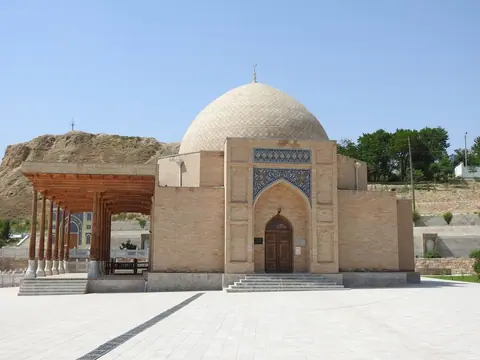
Juma Mosque

The religious complex “Chasma” includes the mosque “Djuma”, the spring, the mosque Panjvakta and bathouse "khamom". The round Djuma mosque was constructed above the spring and has 40 columns. The dome, 16 meters in diameter is one of the largest in the Central Asia. The complex was build on the foot of the Nur Fort build by Alexander the Great.

Navoi
Navoi Region
Uzbekistan

Sulaiman-Too mountain

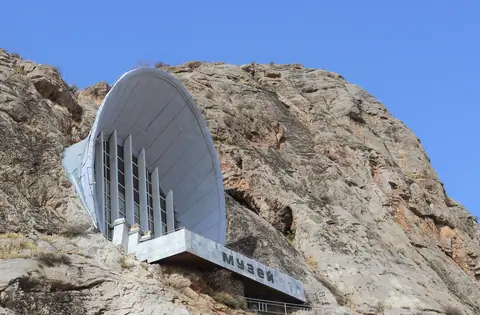
Sulaiman-Too Sacred Mountain dominates the Fergana Valley and forms the backdrop to the city of Osh, at the crossroads of important routes on the Central Asian Silk Roads. For more than one and a half millennia, Sulaiman was a beacon for travellers revered as a sacred mountain.

Multi-temporal and heterogeneous monuments dating from the Neolithic to the late Middle Ages inclusive form Historical-archeological complex Sulaiman-Too. 

Osh
Kyrgyzstan