Karakalpakstan

Karakalpakstan is Uzbekistan’s autonomous republic in the far west, where Nukus, the Amu Darya delta, Muynak, Ustyurt and the exposed Aral Sea bed demand restraint. The region is about people living with environmental change, not disaster scenery.
Contains

Moynaq Ship Cemetery

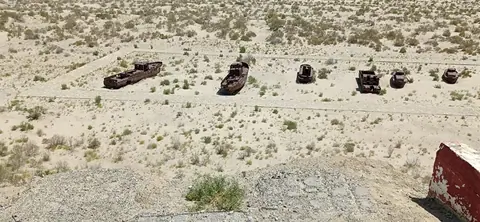
Muynak was once an oasis where fishing flourished and the Aral Sea was one of the largest salt lakes in the world. Since the 60s of the last century, the sea has been regularly drained by man, in order to change the direction of the rivers for the irrigation of the fields. 

As a result of this activity, the sea began to die off, exposing the land to a lot of dust and toxic chemicals. The rusting remains of the ships are a landmark that clearly shows the sad consequences of the unreasonable treatment of the Aral Sea. 

Moynaq
Karakalpakstan
Uzbekistan

Nukus Airport

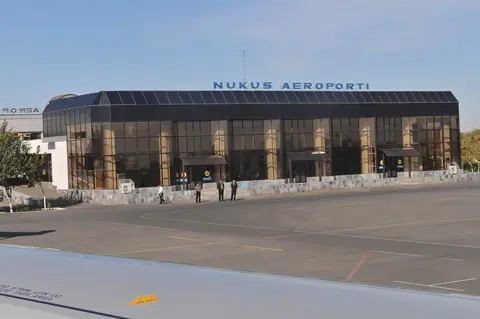
Nukus International Airport under the IATA code "NCU" was built in the 1960s, and is located in the north of Uzbekistan. The current airstrips were renovated in 2011. The airlines Ural Airlines and Uzbekistan Airlines operate from this airport.

Nukus
Karakalpakstan
Uzbekistan

Aral Sea

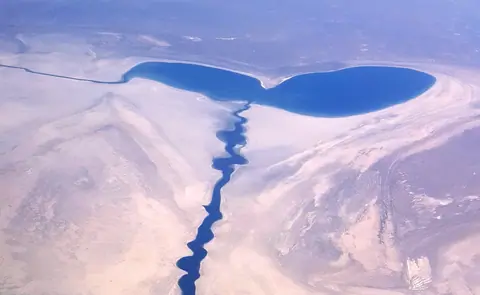
The Aral Sea is located in northern Central Asia, between Aktobe district in Kazakhstan and north of the autonomous region of Karakalpakstan in Uzbekistan. Until the third quarter of the 20th century, it was the fourth largest salt lake in the world and contained 10 grams of salt per liter. The two rivers that feed it are the famous rivers Amu Darya and Syr Darya. Two rivers originating in the mountains of Kyrgyzstan, Tajikistan and Afghanistan.

Nukus
Karakalpakstan
Uzbekistan

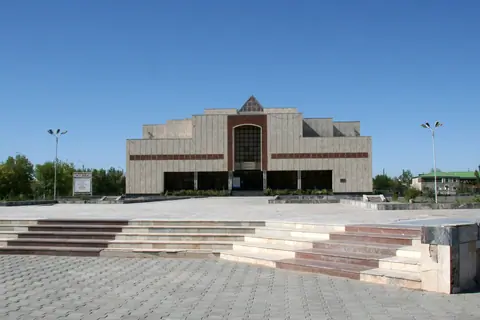
Savitsky Museum

The National Museum of Arts named after I. V. Savitsky, located in Nukus, is one of the largest museums in Uzbekistan. The museum's collection is recognized as the second in the world in terms of importance and volume among the collections of works of the Russian avant-garde, as well as the best collection of art in the Asian region.

Nukus
Karakalpakstan
Uzbekistan

Fortress Kyzyl Kala

This ancient building dates from the I–II centuries AD. E. According to the main version, the construction was built to strengthen and defend the territory. This necessity was dictated by the special location of Khorezma — the Great Silk Road once passed through this region. According to others, the fortress may well be the mansion of a landowner, serve as a platform for hosting a garrison, serve as a transport hub for caravans passing along this route, or be used as an agricultural center.

Ellikqala
Karakalpakstan
Uzbekistan

Necropolis Sultan Ouvays Baba

The memorial monument of XVII-XIX centuries. " Sultan Ouvays Baba is located on the territory of Beruni district of Karakalpakstan. The name of the complex associated with the name Uvays al-Gharani, who, according to tradition, was one of the followers of the Prophet Muhammad

Beruniy
Karakalpakstan
Uzbekistan

Nukus Museum of Art

The State Art Museum of the Republic of Karakalpakstan, named after I.V. Savitsky is an art museum based in Nukus, Uzbekistan.

Opened in 1966, the museum houses a collection of over 82,000 items, ranging from antiquities from Khorezm to Karakalpak folk art, Uzbek fine art and, uniquely, the second largest collection of Russian avant-garde in the world.

Nukus
Karakalpakstan
Uzbekistan