City

Path Element
cities

Ulyastai is not only the historical heritage of Mongolia, but also a living page in the history of this amazing country. Located in a picturesque valley surrounded by the mighty Khangai Mountains, Ulyastai attracts attention with its rich cultural heritage and majestic nature.

One of the three oldest settlements in Mongolia, Ulyastai has over time become an important caravanserai connecting Ulaanbaatar and Hovd in the west. Its historical significance is reflected in its architecture and cultural traditions, which are still alive and important to the local people.

Geo

Contains

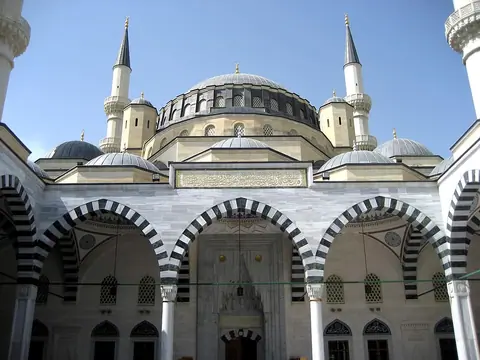
Ashgabat is the capital city of Turkmenistan, a country located in Central Asia. Here are some interesting facts about Ashgabat:

City of White Marble: Ashgabat is often referred to as the "City of White Marble" due to its striking architecture featuring numerous buildings covered in white marble. The use of marble is a deliberate aesthetic choice by the government to create a visually impressive and cohesive urban landscape.

Geo

Contains

Anau is an ancient city in the southwestern part of Turkmenistan, which amazes with its historical heritage and unique architecture. It is located on the banks of the Murghab River and is one of the oldest and most interesting cities in the region.

Historical heritage:
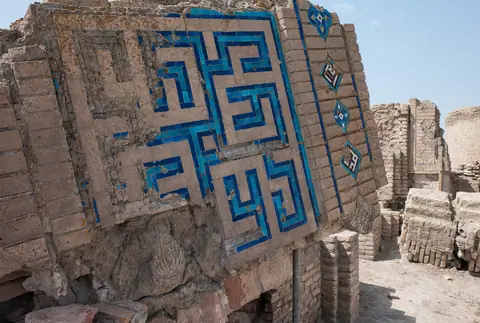
Anau is famous for its ancient monuments and historical attractions. Particularly impressive is Kunya Urgench, an ancient city that was once the center of the great Khorezm state. Here you can see the remains of mausoleums, minarets and mosques, testifying to the greatness of past eras.

Geo

Balkanabat is a picturesque city located in the western part of Turkmenistan on the coast of the Caspian Sea. It is famous for its rich historical heritage, cultural traditions and unique architecture, which make it one of the most interesting tourist destinations in the region.

Geo

Dashoguz is a large city in the northern part of Turkmenistan, located in the historical region of Khorezm. The city is famous for its cultural and historical attractions, and is also an important economic and cultural center of the region.

Historical heritage:
Dashoguz has a rich historical heritage associated with the ancient civilization of Khorezm. Here you can see archaeological sites, ancient fortresses and mausoleums that will tell you about the greatness of past eras and the cultural heritage of the region.

Geo

Jizak (or Jizzax / Jizzakh) is the administrative center of the Jizzakh region, a city of regional subordination of 180,000 inhabitants. A major transport hub, economic, scientific, educational and cultural center of the region. Located on the highway between Tashkent and Samarkand. It is also connected to these towns by a railway line. It is located on the northern foothills of the Nuratau Ridge, on the Sanzar River, in the southern part of the Mirzachul Steppe. It was founded in the 10th century, in an oasis rich in vegetation, as an important transit point on the Great Silk Road.

Geo

The city was founded in 1958 and was part of the Bukhara region. It was established as a mining center for the extraction of rare-earth elements, precious metals, and uranium.

The city was named Navoi in honor of the famous Uzbek poet and philosopher Alisher Navoi. It has about 136,000 inhabitants.

Geo
Contains

The city of Karshi or Qarchi developed from a colony which was established from the 7th century BC. It was then that defensive walls began to be built around the ancient city. The remains of the ruins of these walls were first studied by archaeologists in 1999.

There is evidence that the city at this time had the Sogdian name Navtak, which can literally be translated as "New Building". As part of the Greco-Bactrian kingdom, the city may have been called Eucratideus.

Geo

Gulistan or Guliston is a city of 100,000 inhabitants and it is the administrative center of the Syrdarya region in Uzbekistan. In Persia, Gulistan means the "land of flowers"

In the 19th century, the city developed on the village of Achchikkuduk ("a well with salt water"), in which there were 40 courtyards, there was a mosque and a tea room.

In 1869, by decree of the Governor General of Turkestan KP Kaufman, the possibility of irrigating the starving steppe was studied and in 1886 the construction of the great canal began.

Geo

Termez (or Termiz) is one of the oldest cities in Central Asia: it is over 2,500 years old. In 2014 Termez was awarded the Order of Amir Timur. It is located in the extreme south of Uzbekistan on the northern border of Afghanistan, an important passage between these 2 countries.

Geo
Contains