City

Path Element
cities

Qurghonteppa is the third largest city in Tajikistan and the capital of Khatlon province. It is located in the Vakhsh Valley in southwestern Tajikistan, 119 km south of the capital Dushanbe. According to ancient sources, Qurghonteppa appeared during the time of the Kushan Empire and could be the ancient Levakand. These places were famous for the good arrows and a special breed of sheep. Archaeologists have discovered here pipes from an ancient aqueduct, wells made with bricks, fortress walls with towers.

Geo

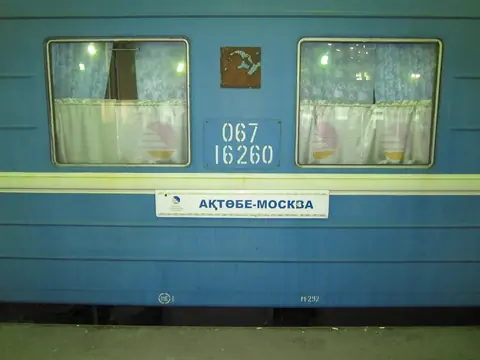
Aktobe is one of the largest cities in Kazakhstan and the administrative center of the Aktobe region. The city is located in the western part of the country, on the border with Russia. Here is some information about the city of Aktobe:

History: The city was founded at the end of the 19th century and was called "Aktyubinsk". In 1999, the city was renamed “Aktobe”, which means “white mountain” in Kazakh.

Climate: Aktobe has a continental climate with cold winters and hot summers. Winters are usually dry and cold, while summers are quite hot and dry.

Geo

Atyrau is a city in the western part of Kazakhstan, located on the Ural River. The city is the administrative center of the Atyrau region and one of the key oil and gas regions of Kazakhstan. Here is some information about the city of Atyrau:

History: Atyrau has an ancient history associated with trade and fishing on the Ural River. The city was founded in the 19th century and has since developed as an important transport and industrial center.

Geo

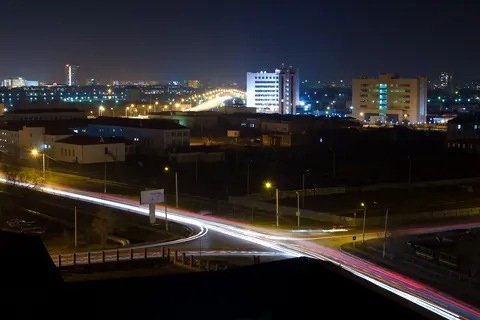
Ust-Kamenogorsk is a large city in Eastern Kazakhstan, located on the Irtysh River at the foot of the Semipalatinsk Alatau mountain range. This city combines industry, culture and natural beauty. Here is some information about the city of Ust-Kamenogorsk:

Geo
Contains

One of the largest town located on the Yakhsu River. Maybe more thant 3000 years old. 

Geo
Contains
Image
ulan_bator_ulaanbaatar.jpg
Height
930
Width
1224

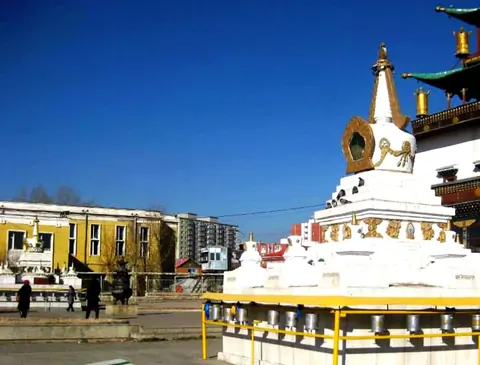
Ulaanbaatar (or formerly Ulan Bator) was founded in 1639 as an administrative center of Mongolian Buddhism. Today, half of the population of Mongolia lives in the capital, or 1.4 million people.

Geo

Contains

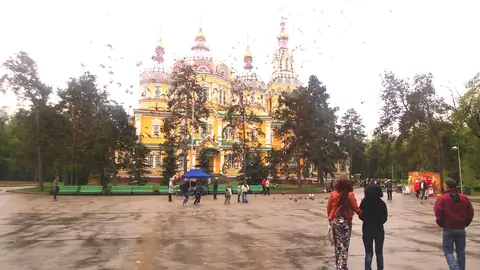
Almaty, one of the largest and most dynamically developing cities in Kazakhstan, located in the southeast of the Republic of Kazakhstan, in the foothills of the Zailiyskiy Alatau, appears to visitors as the pearl of Central Asia. With a population of about 1.5 million inhabitants, it intertwines ancient traditions and modern trends, possessing a unique character and atmosphere.

Geo

Contains

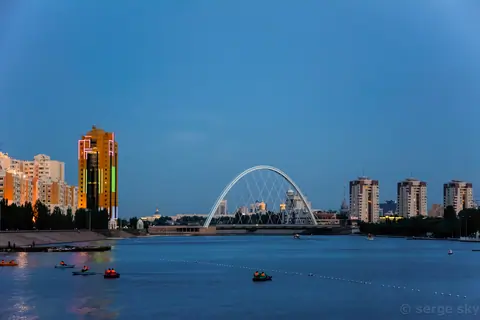
Astan ("the shining king"; formerly Akmoolinsk, Tselinograd, Akmola, Astana, Nur-Sultan) has been the capital of the Republic of Kazakhstan since December 10, 1997. At the start of 2020, its population numbered 1,136,156. in fact the second most populous city in Kazakhstan after Almaty. Nur-Sultan is located in the north of the country, on the banks of the Ishim River.
The area of ​​the territory of the city is 797.33 km²

Geo
Contains

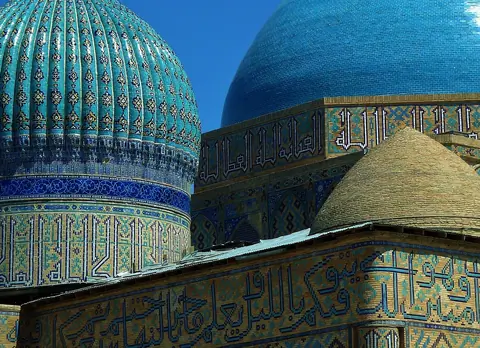
The city of Turkestan is not just a historical heritage, it is a living witness to the grandeur and beauty of ancient Central Asia. Located among the arid steppes of the extreme south of Kazakhstan, it is a place where every stone, every corner is imbued with the spirit of ancient times.

The first ancient settlement on the territory of modern Turkestan appeared in the early VI century BC. Over time, the city became one of the most important centers of culture, religion and trade in the region, attracting travelers and pilgrims with its shrines and history.

Geo

Contains

Since its foundation by the kingdom of Kokand in 1820 and until its capture by the Russian troops in 1852, the fort was called Ak-Mechet (Ak-Meshit). Thus, the Count Vassili Perovski and General of the cavalry of Emperor Alexander II, took control of the southern borders of the Empire and dominated the khanate of Kokand. Fort Perovski takes its name in 1862, then Perovski city until 1925, when it will be named Kyzylorda (Kyzyl Orda in Kazakh means the red capital).

Geo