Nature Site

Path Element
nature

National Park Karakol

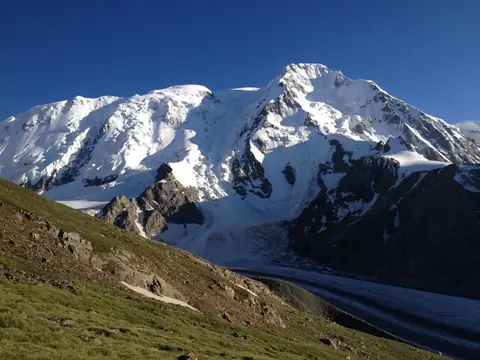
National Park Karakol is created 15th April at 1997 in Yssyk Kul region , district Ak-Suu as a reserve. It occupies 38256 h, and unique natural complexes of the gorge Karakol are stored in him.

The fauna is represented by a roe, a capricorn, a wolf, a fox, a marten, an ermine, from birds - an ular, a stone partridge. From the Red List: a leopard, a golden eagle,a kumai,a saker, a lamb live here.

Karakol
Kyrgyzstan
Altyn Emel

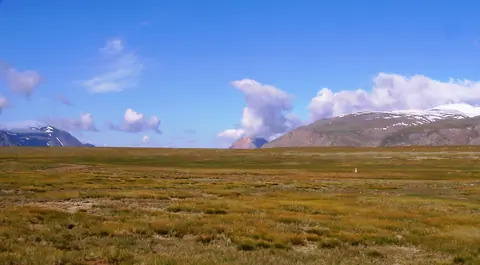
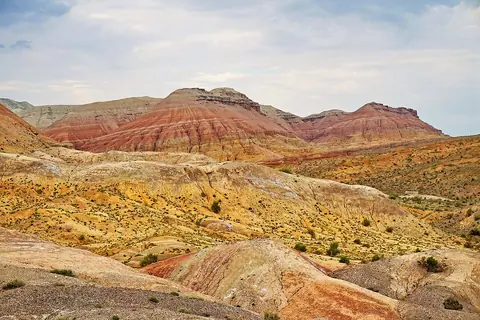
Altyn Emel National Park is the largest and most famous nature conservation area in Kazakhstan, where the famous Singing Barkhan, the majestic Sak kurgans and the picturesque mountains of Aktau and Katutau are located. The park covers 523053 hectares and is located in the valley of the Ili River, 300 km away from the city of Almaty. Altyn Emel lies in the desert and mountain zones, where 1,800 species of plants grow. Within the park there are 78 species of mammals and 260 species of birds. On the spacious plains and mountain slopes gazelles, kulans and argali feel great.

Basshi
Jetisu Region
Kazakhstan

Karabatkak Lake

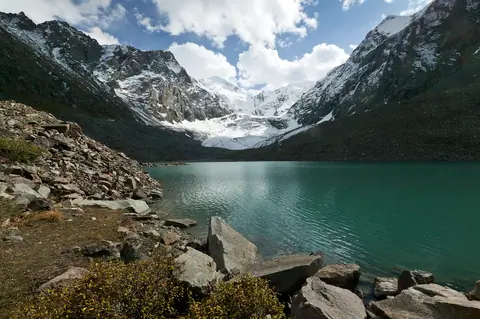
A small mountain glaciar lake in the Karabatkak valley on the foot of the Karabatkak glacier and the Kashkator peak. The lake glacier is the subject of studies on global warming. 

The glacier is retreating 5 to 6 meters per year. On the shore of the lake, there is a small hut where several measuring devices are installed. The lake is just over 7km from Chong Kyzyl Suu geophysical station.

Jeti-Ögüz
Kyrgyzstan

Kanbula National Park

Kanbula National Park spans the vast expanse of eastern China and is one of the region's most breathtaking natural sites. Its landscapes delight with mountains, lakes, forests and picturesque valleys. This park attracts tourists with its diversity of flora and fauna, as well as unique natural formations.

The main pearl of the park is Kanbula Lake, known for its crystal clear water and framed by majestic mountains. The lake is home to many species of wildlife and birds, and also attracts outdoor enthusiasts with its fishing and water sports opportunities.

Jianzha
Qinghai Sheng
China

Hudriin Davaa

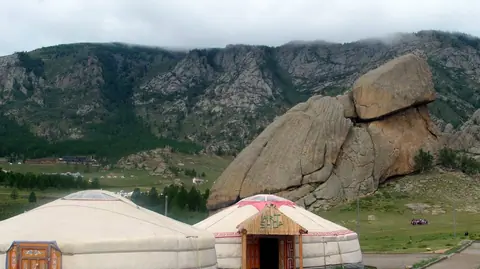
The campsite is located near an old iron mine, close to the Khudriin (Hudriin; Hiidiin) Davaa Gorge, where the tranquil waters of the Tuul (Tula; Tola gol) River meander through the rugged terrain. To the southeast stands the majestic Hiidiin Sardag peak, which rises to 2665 meters above sea level and forms part of the Khentii Ridge. This ridge is one of the main sources of the Tula River, which flows downstream through the capital of Ulaan Baataar.

Terelj
Töv
Mongolia

Alauddin lakes

Lake Alaudin, also known in Russian as "Mutnye ozera" (the murky lakes), is a high-altitude lake located at 3,519 meters in the upper part of the Pasrud Valley in Tajikistan’s Fann Mountains. It lies directly at the foot of the Kaznok Pass, which rises to 4,088 meters, surrounded by 5000 m. alt. peaks such as Chimtarga, Mirali, Energia, Zamok and Chapdara.

Artuch
Tajikistan

Fan Niagara high waterfall

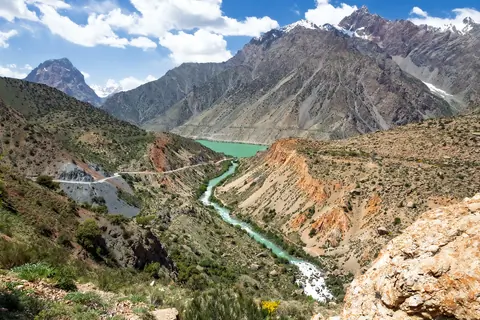
In the heart of the Fann Mountains, in northern Tajikistan, the Fan Niagara waterfall dramatically marks the spectacular exit of Lake Iskander (Iskanderkul, Iskenderkul). At this spot, the lake’s turquoise waters rush into a rocky gorge and powerfully plunge 38 meters down, forming a roaring curtain of foam that echoes throughout the valley. 

Iskanderkul
Tajikistan

Khorog botanical garden

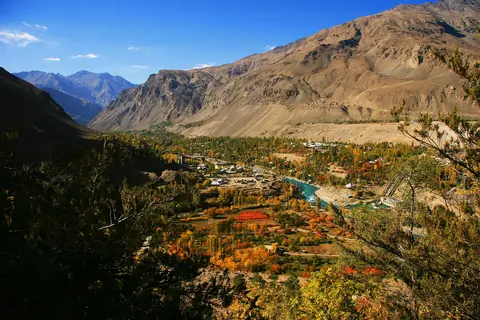
Did you know that the Pamir Botanical Garden is the highest mountain park? And also the second highest altitude in the world after the botanical garden of Nepal. It is located at an altitude of 2320 meters above sea level near the city of Khorog, the center of the Gorno-Badakhshan Autonomous Oblast of Tajikistan. The territory of the garden, broken at the confluence of the two high-mountain rivers Gunt and Shahdara, is 624 hectares. The high-mountain garden was laid in 1940 on the terrace above Khorog.

Khorog
Tajikistan

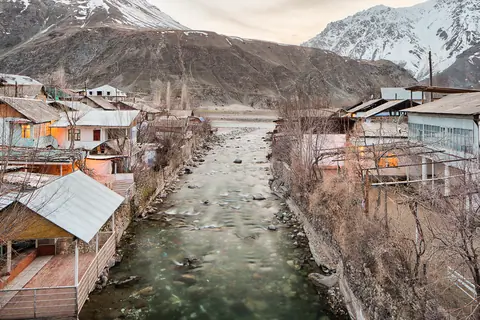
Qal'ai Khumb is a picturesque small town located in the Gorno-Badakhshan Autonomous Region of Tajikistan, along the Afghan border. Once the capital of the independent state of Darvoz, it now serves as the administrative center of the district bearing the same name. 

The town is situated at the confluence of the Obi-Khumbob River and the powerful Panj River, which forms the natural border with Afghanistan and divides Qal'ai Khumb into two distinct parts: Qal'ai Khumb to the east and Darvoz to the west. 

Geo