Historical Site

Path Element
historical-site

Khakhka fortress

A Sentinel of History

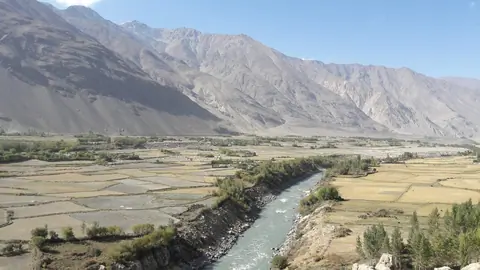
Nestled in the remote and breathtaking Wakhan Valley of Tajikistan's Gorno-Badakhshan region, the ancient Khakhka Fortress (also known as Qah Qaha, Kaahka, or Kah-Kakha) stands as a dramatic sentinel above the village of Namadgut. Perched on a massive natural cliff overlooking the swirling Panj River—which forms the international border with Afghanistan—this crumbling citadel dates back to around the 3rd–2nd century BCE, during the height of the Kushan Empire and the flourishing of the Silk Road.

Ishkashim
Tajikistan
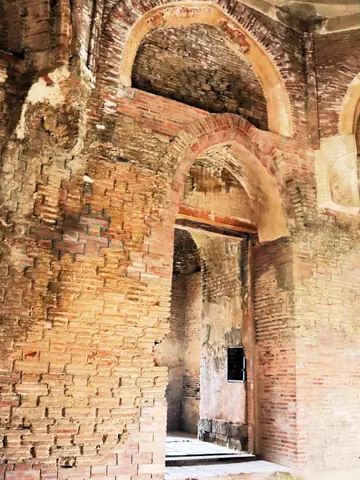
Historical complex of Uzgen

In the heart of southern Kyrgyzstan, the ancient town of Uzgen invites travelers to step into a lesser-known chapter of the Silk Road. Overlooking the fertile Kara-Darya valley, this historic complex once stood at the crossroads of trade, culture, and belief. Today, it remains one of the most atmospheric heritage sites in the country—quiet, authentic, and deeply rooted in Central Asia’s past.​

Uzgen
Kyrgyzstan

April revolution memorial

The April Revolution Memorial is a special place in the center of Bishkek that reminds people of the events of April 7, 2010, when 87 people died. On that day, many citizens took to the streets to express their dissatisfaction with the government. The protests were violent, and dozens of people gave their lives for change in the country.

Bishkek
Kyrgyzstan

Erkindik - Revolution Militant square

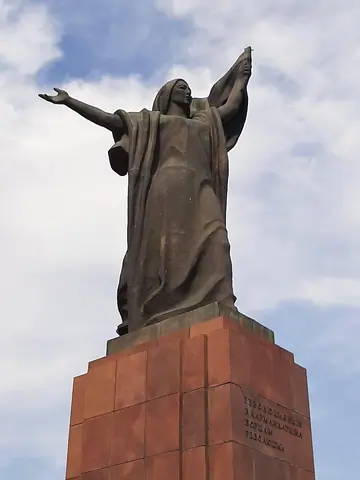
Erkindik Revolutionaries Square is located in the center of Bishkek. It is one of the city's important historical sites. The square was built during the Soviet era and is dedicated to the people who participated in the revolutionary events of the early 20th century in Kyrgyzstan and Central Asia. The main feature of the square is the Monument to the Revolutionaries, unveiled in 1978. It was created by the famous Kyrgyz sculptor Turgunbay Sadykov together with architect G. Kutateladze.

Bishkek
Kyrgyzstan

Rumi's house

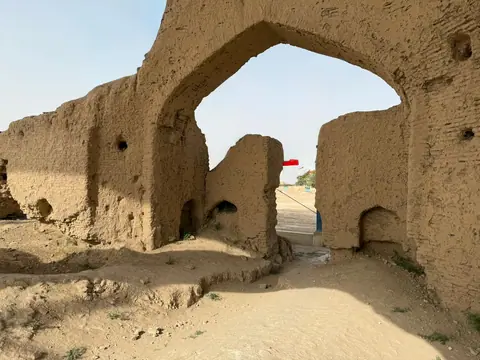
In the arid north of Afghanistan, not far from the city of Mazar-i-Sharif, a modest archaeological site draws the attention of scholars, mystics, and wanderers alike. The exposed foundations and weathered stone walls shown in this photo are believed by local tradition to mark the birthplace of Jalal ad-Din Muhammad Rumi—the 13th-century Persian poet, Sufi mystic, and philosopher whose verses still echo across the world.

Balkh
Afghanistan

Khoja Yakub Mosque

A remarkable landmark embodying the rich cultural heritage of the country.

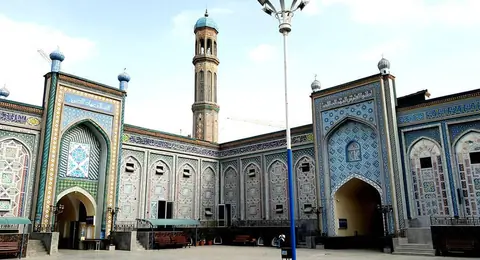
The history of the mosque is closely intertwined with political and social changes in Tajikistan. Built in the 19th century, it has stood the test of time, serving as a center of attention for the Muslim community. After the collapse of the Soviet Union in 1991, the mosque underwent significant reconstruction, symbolizing the modern Islamic revival in the country.

Dushanbe
Tajikistan

Dushanbe Central mosque

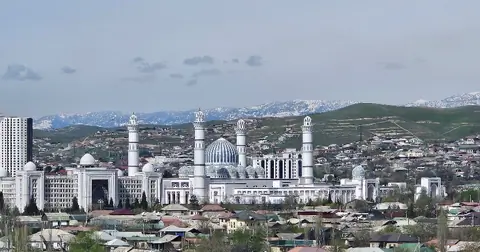
The Central Cathedral Mosque of Dushanbe, named after Imam Abu Hanifa, is the second largest mosque in Central Asia after the Hazrat Sultan Mosque in Astana.

It was inaugurated on June 09, 2023 by the President of Tajikistan Emomali Rahmon together with the Emir of Qatar Sheikh Tamim bin Hamad Al Thani, who donated part of the funds for the construction of this magnificent complex.

Dushanbe
Tajikistan

Observatory of Shorbulak

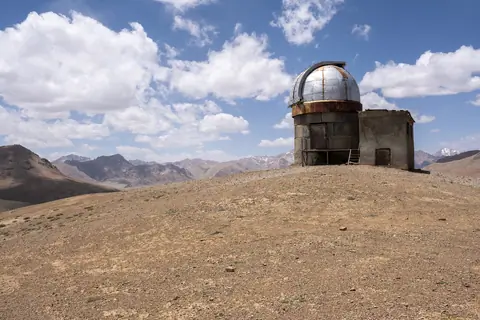
Shorbulak Observatory is one of the world’s highest astronomical sites, perched at over 4,300 m in the remote mountains near Murghab, in the Tajik Pamirs. Built during the Soviet era for space and infrared research, its dry, cloudless skies made it an ideal place for observing stars and cosmic rays. Though now abandoned, the observatory remains accessible and fascinating to visit: rusted domes, old telescopes, and crumbling Soviet-era buildings stand silent against a dramatic mountain backdrop.

Murgab
Tajikistan

The Shakhty cave paintings

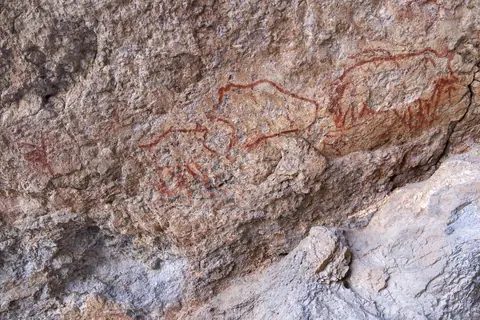
The Shakhty cave paintings, located at over 4,200 meters altitude in the Eastern Pamirs, near Murghab, are among the oldest examples of rock art in Central Asia. Discovered in 1958 by Soviet archaeologist Vladimir Ranov, they depict a striking hunting scene painted in red pigment derived from local iron oxide. The artwork shows a central figure—possibly a hunter or a shaman—wearing a bird-shaped mask and aiming at a wild boar, accompanied by yaks and a bear, some of which are pierced with arrows.

Murgab
Tajikistan

Zhambyl Zhabayev Historical House

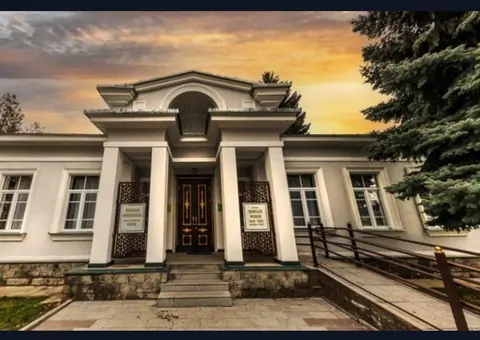
Zhambyl Zhabaev (1846-1945) was an outstanding Kazakh akyn (folk improvisational poet) who lived for almost 100 years and became a symbol of Kazakh oral poetry. He was a continuer of the tradition of zhyrau (steppe storytellers) and went down in history as one of the most famous performers of aytys (poetic competitions). Zhambyl was born near modern Taraz (the city was formerly called Aulie-Ata) and devoted his entire life to glorifying his native land, folk wisdom and heroism.  

Taraz
Jambyl Region
Kazakhstan