Historical Site

Path Element
historical-site

Great Wall

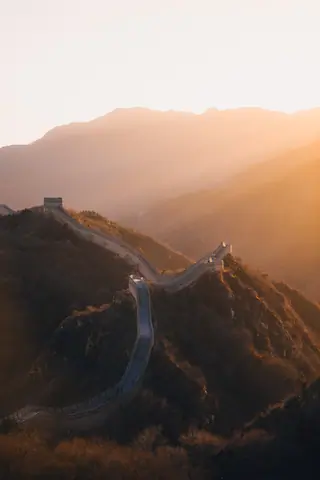
The Great Wall of China is not just an engineering structure, it is a symbol of the greatness and perseverance of the Chinese people who built it over the centuries to defend their land from enemy invaders. Spanning thousands of kilometers across the mountains, plains and deserts of northern China, this historic monument is one of the most impressive architectural and engineering marvels.

Beijing
Beijing Shi
China
Chengde

Chengde, the capital of China's Sichuan Province, is one of the oldest cities in China with a rich historical and cultural heritage. Located on the banks of the Minjiang River, this city is famous for its beautiful nature, unique architecture and rich cultural heritage.

Chengde is famous for its historical sites such as Qingshan Taoist Temple, Tianfu Giant Boulevard and Shuilong Handicraft Town. Here you can see magnificent temples, ancient Chinese palaces and many other historical monuments that tell the rich history and culture of Chengde.

Chengde
Hebei Sheng
China

Jiayuguan

Jiayuguan, literally translates to “Great Wall”, and it is not just a place where China's wall rises in its grandeur, but also a symbol of the strength, endurance and greatness of the Chinese empire. Located in Gansu Province, Jiayuguan represents one of the most impressive and historically significant sections of the Great Wall of China.

Jiayuguan
Gansu Sheng
China

Mogao caves

Mogao Caves is a unique architectural complex and art repository located in the western part of China, Gansu Province. The site is one of China's most important cultural and historical monuments and has been designated a UNESCO World Heritage Site.

The history of the Mogao Caves dates back to the 4th century AD and continues until the 14th century. This marvelous complex consists of more than 700 caves and grottos carved into the rocks, inside of which are sculptures, murals, statues and other works of art reflecting China's rich cultural and religious history.

Dunhuang
Gansu Sheng
China

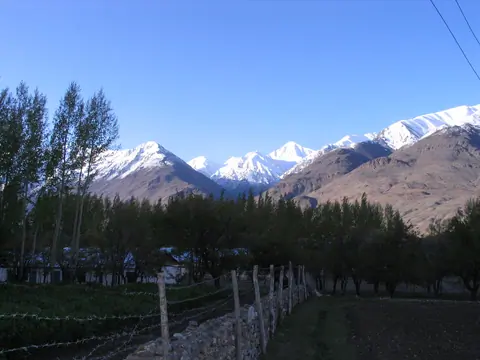
The village of Ishkashim is located in the Panj River valley, between Langar and Khorog, in the highland part of the Pamirs. It lies at an altitude of approximately 2500-2600 m, at the foot of the majestic Saparodzha Peak with a height of 5864 m

Every Saturday residents and visitors can visit the famous Afghan market. This bazaar takes place on a neutral territory - an island or strip of no-man's-land in the Panj River, and it is possible to get there without a visa.

Geo
Contains

Yamchun Fortress

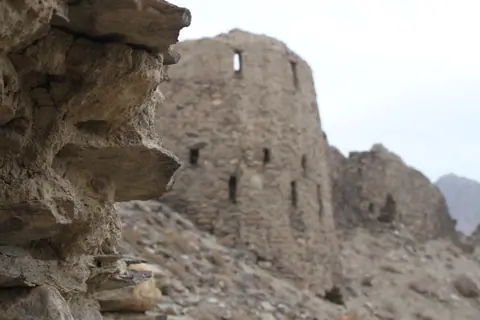
Yamchun fortress is one of the most interesting historical sites in the Wakhan Valley. Yamchun is 72 km away to the east of the district center Ishkashim. The fortress was built during th 3rd century BC during the Greek-Bactrian Empire, on the Great Silk Road, in order to control southern invaders coming from the Pakistan valley of Chitral. A triangular citadel overlooks the village of Yamchut above 360 meters. The citadel is at the top of another walled triangle of nearly 600 meters length and with a base of about 400 meters.

Yamchun
Tajikistan

Fortress Kyzyl Kala

This ancient building dates from the I–II centuries AD. E. According to the main version, the construction was built to strengthen and defend the territory. This necessity was dictated by the special location of Khorezma — the Great Silk Road once passed through this region. According to others, the fortress may well be the mansion of a landowner, serve as a platform for hosting a garrison, serve as a transport hub for caravans passing along this route, or be used as an agricultural center.

Ellikqala
Karakalpakstan
Uzbekistan