Museum

Path Element
museum

Historical and Ethnographic Museum of Karakol

The museum is housed in a pretty chocolate-box cottage in central Karakol, and it was the pre-revolutionary summer home of the Iliana merchant family. From 1918-1920 the building earned its socialist stripes as headquarters of the Regional Revolutionary Committee, and was subsequently transformed into a museum by order of the Soviet Council of Ministers in 1948.

Karakol
Kyrgyzstan
Historical museum of Orgochor

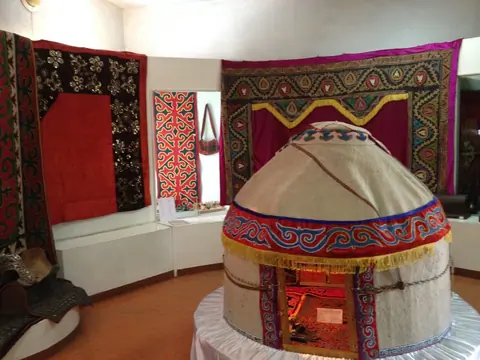
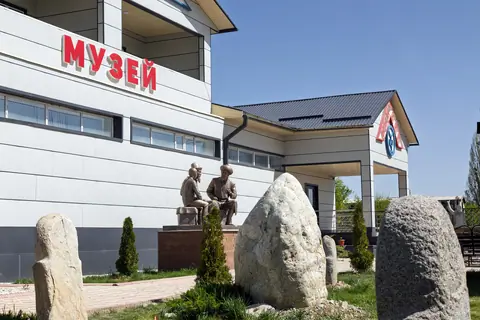
The Orgochor Historical Museum is a unique place where the memory and spirit of the region's past are preserved. The museum is a cultural centre where exhibits reflecting the history, traditions and everyday life of the local people are collected. You can see artefacts dating back to different historical periods, as well as learn about the development of Orgochor and its surroundings.

Orgochor
Kyrgyzstan

The Historical Museum

Image
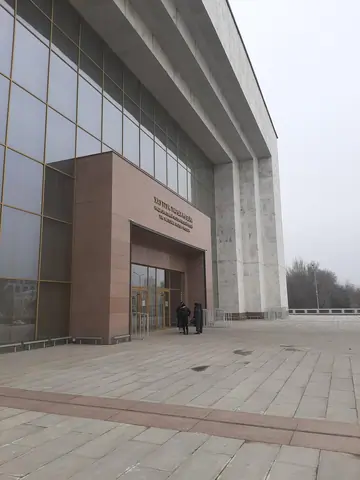
histrical museum picture of entrance
Height
4032
Width
3024

 On November 19, 2021, the grand opening of the Historical Museum in Bishkek, which was closed for reconstruction for five whole years, took place. This Museum used to be called the Lenin Museum and it was opened in 1926. Now local residents and tourists have a unique opportunity to see historical monuments with their own eyes!

Bishkek
Kyrgyzstan

Mosuo Folk Custom Museum

The Mosuo Folk Tradition Museum is a unique cultural institution located in Yunnan Province, China. This museum is an important center for the preservation and promotion of the cultural heritage of the Mosuo ethnic group, presenting the richness and diversity of its traditions and customs.

Lugu Lake
Yunnan Sheng
China

Maghoki-Attar Mosque and Carpet Museum

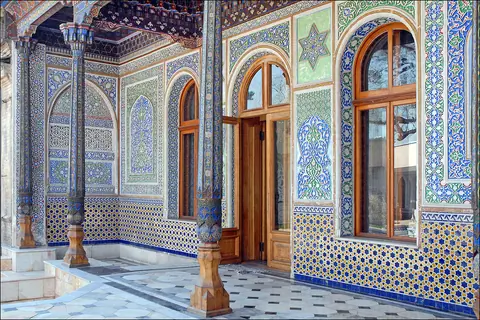
Carpet Weaving Museum. The exposition of the carpet museum was opened in 1991 in the ancient mosque of  Maghoki-Attar(XVI century) near the ancient Shahrud canal, in the center of the old city, next to the dome of the Sarraphon money changers. Before the invasion of the Arabs (VIII century), there was a bazaar at this place, where idols, medicinal drugs and spices were sold. There was also a temple of fire worshippers "Moss" ("temple of the moon").

Bukhara
Bukhara
Uzbekistan

Savitsky Museum

The National Museum of Arts named after I. V. Savitsky, located in Nukus, is one of the largest museums in Uzbekistan. The museum's collection is recognized as the second in the world in terms of importance and volume among the collections of works of the Russian avant-garde, as well as the best collection of art in the Asian region.

Nukus
Karakalpakstan
Uzbekistan

Tibetan Culture & Medicine Museum

The Tibetan Culture and Medicine Museum is a unique place where you can immerse yourself in the world of traditional Tibetan culture, art and medicine. This museum is located in the heart of the old city of Lhasa, the capital of the Tibet Autonomous Region of China, and is one of the most popular cultural and educational sites in the region.

The museum is also a great place to explore Tibetan arts and crafts. The work of Tibetan artisans is on display here, from traditional carvings and weaving to unique jewelry and pottery.

Xining
Qinghai Sheng
China

Ulugbek Observatory Museum

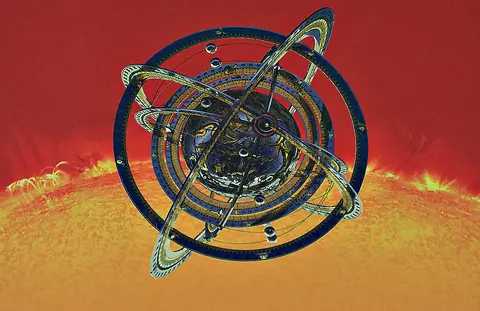
The observatory of Samarkand was built in the 1420s by the Timurid astronomer Ulugh Beg, it is considered by scholars to have been one of the finest observatories in the Islamic world. 
The remains of the observatory were found and studied by archaeologist V.L. Vyatkin in 1908. A study of one of the 17th century documents yielded a precise description of the location of the observatory.

Samarkand
Samarkand
Uzbekistan