Lake Yashyl
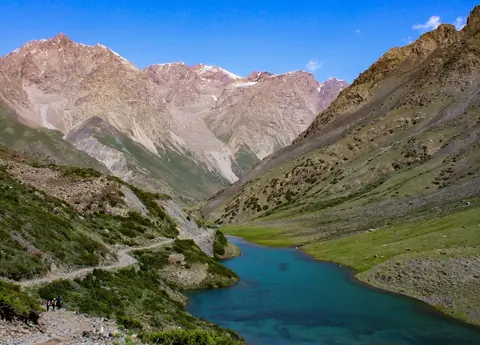
Small lakes on the foot of the Juku pass (north side), with turquoise color. The lower lake is just 100 meters long, the upper one is 400 meters long. It's nice place for camping.
Jeti-Ögüz
Kyrgyzstan
Small lakes on the foot of the Juku pass (north side), with turquoise color. The lower lake is just 100 meters long, the upper one is 400 meters long. It's nice place for camping.
Jeti-Ögüz
Kyrgyzstan
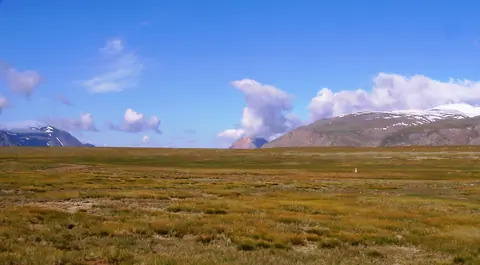
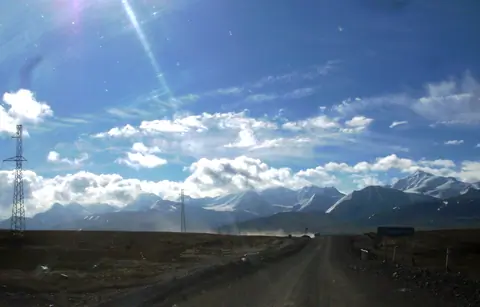
At a high altitude reaching the glaciers of southeastern Kyrgyzstan "hides" one of the main pillars of the economy of that country.
A geophysical expedition of the Geological Committee of the Kyrgyz State discovered the Kumtor deposit in 1978. Then the USSR Ministry of Geology published the results of the detailed exploration of the Kumtor deposit in 1989.
Today, Kumtor's production accounts for more than a third of the country's exports of goods and services, and its mission goes beyond production alone.
Ak-Shyyrak
Kyrgyzstan
All 6 lakes are located on the south side on the plateau of Kashkasuu pass at 3890 meters above sea level. They are surrounded by mountain peaks and glaciers located at more than 4,500 meters.
The caravans coming from the north, who had crossed this difficult pass, probably had to stop at the shore of the lakes to let grazing camels and horses.
Jeti-Ögüz
Kyrgyzstan
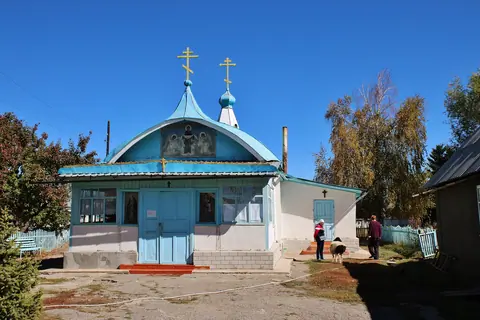
An old church in the village of Kyzyl Suu.
The church is quite beautiful, but a bit difficult to access. There is no sign at all and you have to knock on the blue garden gate to get in.
But it is certainly open, if they have church service, which is on saturdays at 4 o'clock pm and on sundays at 8 o'clock am.
Kyzyl-Suu
Kyrgyzstan
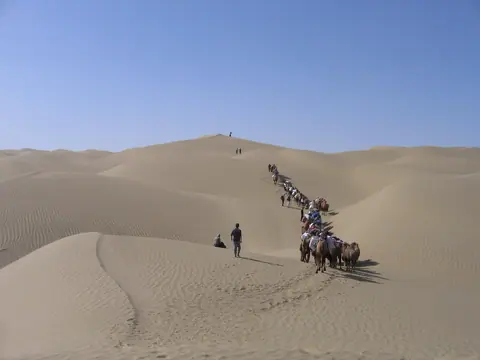
The ancient Silk Road was a dirty road, which was originally used to spread silk from China all over the continent. The silk was in this time a very expensive, but useful product. In 121 BC the first camel caravan loaded with silk started. But soon, there were as well many other outlandish products being transported on the Silk Road. Together with the silk camels carried Indian gerns, Iranian silver jewery, rich cloths from Byzantium, Baltic amber, Mediterranean corals, ceramics, grapes, nuts and many others goods.
Kyrgyzstan
Kyrgyzstan
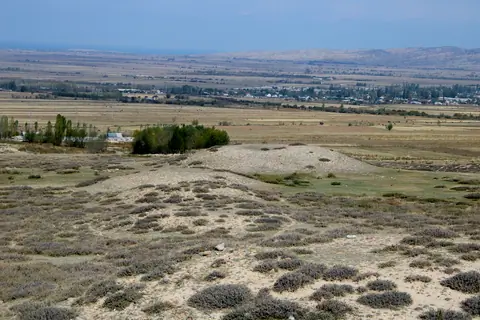
About 20 Kurgans (old tombs) in a field near Kyzyl Suu village.
Jalgyz-Örük
Kyrgyzstan
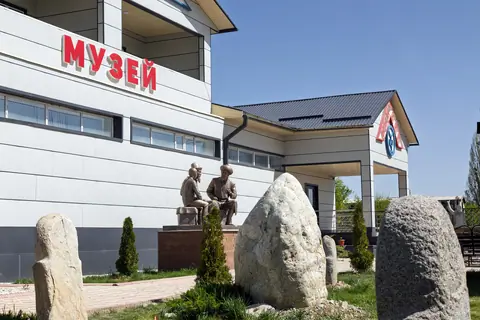
The museum is housed in a pretty chocolate-box cottage in central Karakol, and it was the pre-revolutionary summer home of the Iliana merchant family. From 1918-1920 the building earned its socialist stripes as headquarters of the Regional Revolutionary Committee, and was subsequently transformed into a museum by order of the Soviet Council of Ministers in 1948.
Karakol
Kyrgyzstan
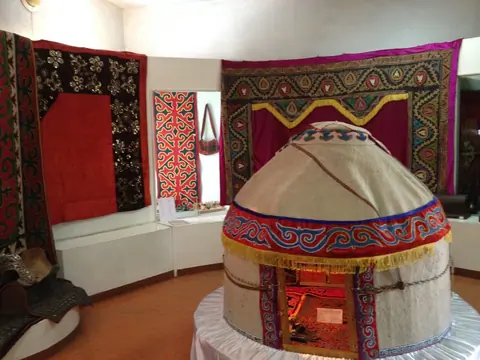
The Orgochor Historical Museum is a unique place where the memory and spirit of the region's past are preserved. The museum is a cultural centre where exhibits reflecting the history, traditions and everyday life of the local people are collected. You can see artefacts dating back to different historical periods, as well as learn about the development of Orgochor and its surroundings.
Orgochor
Kyrgyzstan
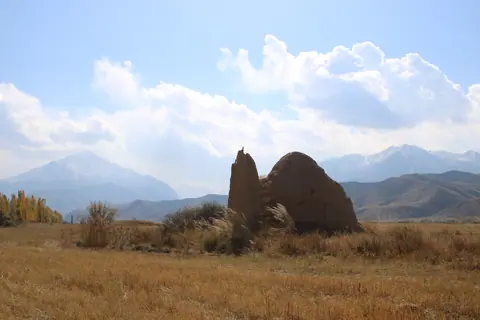
Ruins of ancient Gumbez is the only memory in the valley of Djuuku gorge. If you look around it’s hard to believe that long time ago a lot of things were going on here.
According to the history this gumbez belonged to one rich man called Balchak. Balchak was famous and powerful leader since he owned nomadic tribes in Yssyk-Kul, Kashgar and Central Tian Shan. Balchak built has gumbez in all regions where he owned nomads.
Jeti-Ögüz
Kyrgyzstan
Kara-Balta is located 62 km from Bishkek.
The city has a rich history. She was called Shish-Debe, Shish-Tepe. But the best known of names is Nuzket. Kara-Balta (Nuzket) was one of the most important centers on the Silk Road and the largest industrial crossroads in the Chui region. The town was an important medieval village. Travelers could spend the night here, protect themselves from thieves, sell or trade goods with profit. And the goods that were produced here, went to distant lands on the Silk Road. The town has become a link between mountains and plains.