Sacred Place

Path Element
sacred

Kalon Mosque

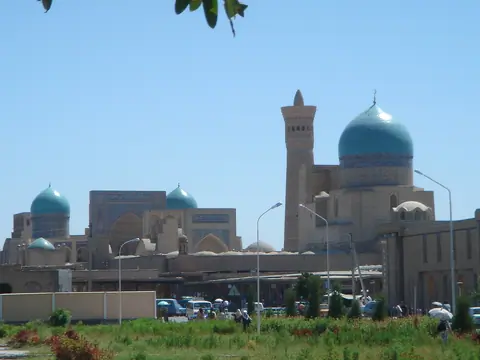
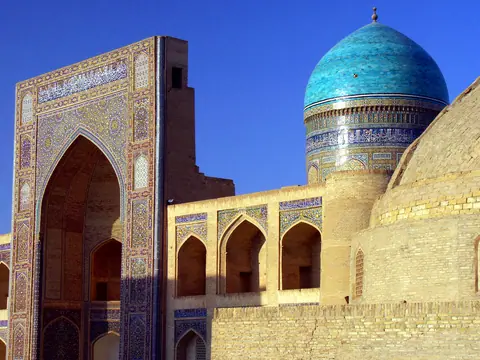
The Kalon Mosque or Kalan, which means "great Mosque", is the former main mosque of Bukhara in Uzbekistan. It was decommissioned for worship in 1924. Listed as a UNESCO World Heritage site, like the entire historical center of the city, it was built at the beginning of the sixteenth century under the Chaybanids on the site of an ancient twelfth-century Friday mosque. It could accommodate twelve thousand people. It is the most important Transoxiana mosque by its dimensions after that of Bibi-Khanum (1399-1404) in Samarkand. It is located opposite the Mir-i Arab Madrasah.

Bukhara
Bukhara
Uzbekistan

Kalon Minaret

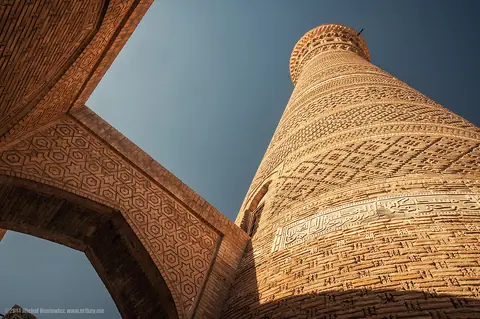
The  Kalon minaret, built in the XII century from burnt brick, rises more than 46 meters, and its top is crowned by a conical lantern. The minaret is connected to the roof of the Kalon Mosque by means of a bridge, from which, in turn, you can climb a spiral staircase to the dome itself, from which an impregnable panoramic view opens. The mosque itself was rebuilt a little later than the minaret – in the 16th century, and to this day is the main mosque of the city.

Bukhara
Bukhara
Uzbekistan