Seasons, Access Limits and Safety Reality
Afghanistan has clear seasonal patterns: hot lowlands, cold highlands, spring and autumn shoulder windows, severe winter in mountain areas. But season is not the first planning question. The first question is whether travel should be considered at all, under what authority, with which partners, and with what risk framework. Weather comes after that.
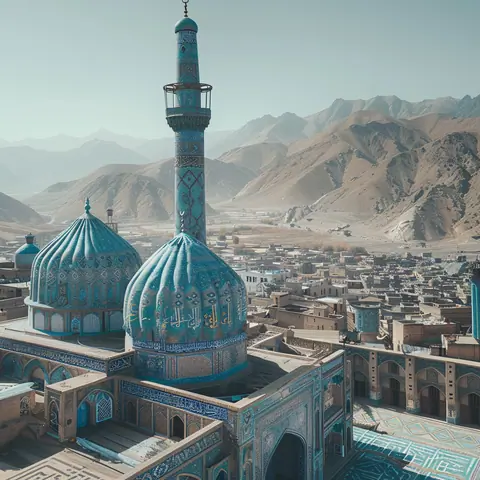
Read the seasons as climate background
| If you are assessing… | Climate window | Do not confuse with | Nomad’s Land note |
|---|---|---|---|
| Kabul and central highland climate | April to June; September to October | A normal leisure travel recommendation | Mild weather does not remove security, access or consular-risk concerns. |
| Northern cultural regions | Spring and autumn | Assuming overland access is simple | Route feasibility depends on current security and border conditions. |
| Mountain areas | Summer for climate only | Permission to plan remote travel | Altitude, roads, services and security must be assessed separately. |
| Winter conditions | December to February | General touring season | Cold, snow and poor infrastructure compound existing risk. |
| Humanitarian, professional or specialist travel | Case-by-case | Tourism logic | Travel should be governed by duty-of-care protocols, not seasonal inspiration. |
The thing most pages get wrong
They answer “when is the weather good?” as if that is the responsible question. For Afghanistan, mild spring temperatures do not make a trip appropriate. The editorial task is to separate climate information from travel encouragement.
When not to go, unless there is a serious operational reason
- Any season without current advisory review: the risk context can change faster than seasonal guidance.
- Winter for remote movement: weather adds difficulty to an already high-risk environment.
- Border-dependent routes without verification: crossings may close or become unsafe.
- Independent leisure travel framed by climate alone: this is not responsible editorial positioning.
Season by season: climate only
Spring: March to May
Spring can bring milder weather, flowering valleys and more comfortable conditions in some regions. It can also bring flooding, unstable roads and regional variation. Climate comfort should not be read as travel feasibility.
Summer: June to August
Summer is hot in many lowland areas and more workable in higher regions from a climate perspective. Heat, infrastructure limits and security context remain decisive.
Autumn: September to November
Autumn often brings comfortable temperatures and clearer conditions in several regions. As with spring, this is climate information, not a standalone travel recommendation.
Winter: December to February
Winter can be severe, especially in highland and mountain areas. Snow, cold and limited services can disrupt roads and compound operational risk.
How to treat this content on the website
- Use as reference: climate context for specialists, journalists or internal route assessment.
- Do not use as promotion: avoid CTAs that imply normal leisure travel availability.
- Keep advisories visible: security context should appear before seasonal appeal.
- Review often: risk-sensitive destination pages need a governance date and human approval.
Weather reference: Kabul is only a climate anchor
Kabul data gives a central highland urban reference. It does not represent Herat, Mazar, Bamiyan, the Wakhan, border regions or remote mountain conditions. It also does not answer whether travel is responsible.
| Month | Average High (°C) | Average Low (°C) | Precipitation (mm) | Sunny Days | Partly Cloudy Days | Overcast Days |
|---|---|---|---|---|---|---|
| January | 7 | -5 | 34 | 15 | 10 | 6 |
| February | 8 | -3 | 60 | 13 | 10 | 5 |
| March | 14 | 3 | 71 | 16 | 11 | 4 |
| April | 20 | 8 | 36 | 20 | 7 | 3 |
| May | 25 | 12 | 21 | 25 | 5 | 1 |
| June | 31 | 16 | 1 | 28 | 2 | 0 |
| July | 34 | 18 | 6 | 30 | 1 | 0 |
| August | 33 | 17 | 7 | 29 | 2 | 0 |
| September | 29 | 12 | 8 | 27 | 3 | 0 |
| October | 23 | 7 | 4 | 25 | 5 | 1 |
| November | 16 | 2 | 18 | 20 | 7 | 3 |
| December | 10 | 0 | 23 | 18 | 9 | 4 |
Source supplied in existing content: Time and Date, Kabul, 2013–2023. Use as a city anchor only; verify against the canonical weather source and current official travel advisories before publication.
Editorial rule
For Afghanistan, climate content must never outrun safety context. The correct tone is not adventure. It is caution, clarity and governance.