Yurt Seasons, Mountain Roads and the Pasture Calendar
Do not choose Kyrgyzstan by temperature. Choose it by what has moved: snow from the passes, families to the jailoo, horses to summer pasture, yurts to the lakes, and roads from theory into reality. A warm day in Bishkek does not mean Song Kul is ready. A sunny forecast for Issyk-Kul does not make an Alay pass easy. In Kyrgyzstan, the season is not a mood. It is permission.
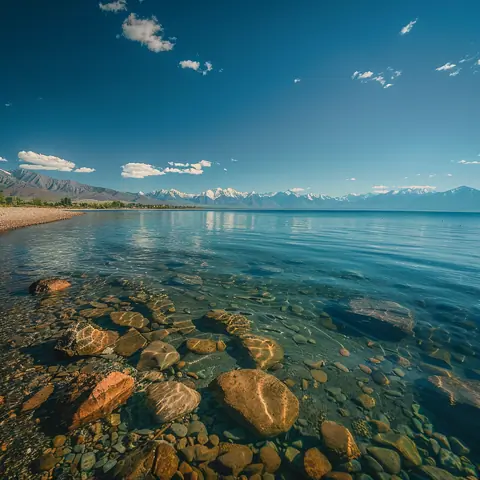
Choose your season by what the journey depends on
| If your trip depends on… | Best window | Do not force | Nomad’s Land note |
|---|---|---|---|
| High pastures, yurt camps and horse-supported routes | July to early September | May plans that pretend the jailoo is already awake | Late June can work, but camps, roads and pasture access must be checked place by place. |
| Song Kul and similar high lakes | Late June to September | Early spring or late autumn without a cold-weather plan | The lake is not only a destination; it is a seasonal camp system. |
| First-time family travel | June, July, August and early September | Routes with too many long transfer days | Build the itinerary around lake rhythm, shorter walks and realistic comfort. |
| Trekking and active mountain travel | July to September | High passes before snowmelt or after early autumn storms | The best route is the one that respects altitude, not the one with the most pins on the map. |
| Cultural travel around Bishkek, Osh and lower valleys | April to June; September to October | Assuming cultural routes need the same season as high mountains | Lower routes open earlier and stay useful later than the jailoo season. |
| Winter skiing, snowshoeing and nomadic winter life | December to March | Calling winter a cheaper summer | Winter is a separate product: shorter days, snow roads, heating realities and more margin. |
The thing most travelers get wrong
They think Kyrgyzstan has a summer season. It has several. There is valley summer, lake summer, pasture summer and high-pass summer. These overlap, but they are not the same. If your route includes yurt camps, horses, alpine lakes or remote passes, the question is not “Is Kyrgyzstan warm?” It is “Has the local travel system moved high enough for this route to work?”
When not to go, unless you know why
- May for high yurt camps: beautiful in the valleys, often premature in the high pastures.
- Late October for classic mountain loops: possible in selected lower areas, but fragile for high routes.
- Deep winter for normal overland touring: rewarding only when the trip is built around snow, cold and shorter travel days.
- August if you hate busy mountain nodes: it is the most reliable high season, but also the moment when popular places carry the most pressure.
Season by season: what changes on the ground
Spring: March to May
Spring is good for Bishkek, Osh, lower valleys, village life and early walks. It is not a promise that the mountains are ready. Expect mud, rain, snowmelt, closed or difficult high roads, and large temperature swings between daytime and evening.
Summer: June to August
Summer is when Kyrgyzstan becomes most itself for travelers: yurts, horses, lakes, trekking, family routes and highland journeys. June opens the door; July and August usually give the most reliable access. The cost is more people in the obvious places and stronger sun at altitude.
Autumn: September to November
September is often the intelligent month: yurts still standing, roads generally open, nights cooler, air sharper. October can be excellent for lower routes and cultural travel, but high mountain logic starts to close. November belongs to selected trips, not wishful thinking.
Winter: December to February
Winter is not a quiet version of summer. It is a different Kyrgyzstan: skiing, snowshoeing, warm homes, cold roads, and itineraries shaped by daylight and access. It can be magnificent. It should not be improvised.
How season changes the route
- Bishkek – Issyk-Kul – Karakol: flexible from late spring to autumn, with summer strongest for lake time and hiking.
- Song Kul: plan around yurt camp readiness, cold nights and access roads, not only calendar dates.
- Osh and Alay: excellent in summer and early autumn; higher passes need careful timing.
- Winter Chuy / Issyk-Kul / ski areas: possible with a different comfort promise and more buffer for roads.
Weather reference: Bishkek is not the whole country
Bishkek data is useful for lowland arrival planning, city clothing and first impressions. It does not tell you whether a yurt camp is operating, whether a pass is open, or how cold a high lake will be at night.
| Month | Average High (°C) | Average Low (°C) | Precipitation (mm) | Sunny Days | Partly Cloudy Days | Overcast Days |
|---|---|---|---|---|---|---|
| January | -0.05 | -9.32 | 33.92 | 5 | 10 | 16 |
| February | 1.3 | -8.2 | 56.29 | 5 | 10 | 13 |
| March | 8.14 | -1.53 | 71.59 | 8 | 11 | 12 |
| April | 14.35 | 4.22 | 103.36 | 9 | 12 | 9 |
| May | 19.34 | 8.68 | 126.48 | 12 | 13 | 6 |
| June | 23.5 | 12.49 | 103.07 | 15 | 10 | 5 |
| July | 26.85 | 14.82 | 56.64 | 20 | 8 | 3 |
| August | 26.12 | 13.75 | 49.78 | 20 | 8 | 3 |
| September | 21.56 | 9.82 | 36.35 | 18 | 8 | 4 |
| October | 14.2 | 4.17 | 54.94 | 12 | 12 | 7 |
| November | 6.45 | -2.5 | 51.51 | 8 | 14 | 8 |
| December | 1.04 | -7.68 | 43.19 | 6 | 15 | 10 |
Source supplied in existing content: Time and Date, Bishkek, 2013–2023. Use as a city anchor only; verify against the canonical weather source before production publication.
Do not ask whether Kyrgyzstan is good in your month. Ask what kind of Kyrgyzstan your month allows. If your dream depends on yurts, horses, passes or high lakes, the route should be built from season outward.