Pamir Roads, Fann Treks and Altitude Realism
Tajikistan does not ask travelers to choose a season. It asks them to choose an altitude. A pleasant day in Dushanbe says almost nothing about the Pamir Highway. A green valley in spring does not open a high pass. A clear summer sky does not make a long road short. In Tajikistan, the calendar is only useful after the route has admitted where it climbs.
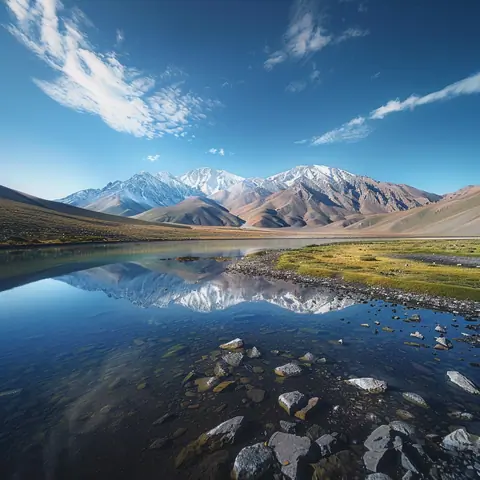
Choose your season by the altitude you are asking for
| If your trip depends on… | Best window | Do not force | Nomad’s Land note |
|---|---|---|---|
| Pamir Highway and Wakhan Valley | July to September | Early spring optimism or late autumn heroics | The Pamirs need road condition, altitude pacing and simple comfort to be planned together. |
| Fann Mountains trekking | Late June to September | High trails before snowmelt | July and August are usually strongest for higher routes; September is often beautiful and colder. |
| Dushanbe, Penjikent and cultural valleys | April to June; September to October | Judging the whole country from mountain rules | Lower cultural routes open earlier and remain useful after high routes become fragile. |
| Photographic mountain travel | June to September | Routes without buffer days | Light can be excellent; road timing and weather still need margin. |
| Winter snow landscapes | December to February | Ambitious overland mountain crossings | Winter should be local, selective and honest about road disruption. |
The thing most travelers get wrong
They think the Pamir Highway is a road trip. It is, but not in the casual sense. It is a high-altitude journey through distance, exposure, cold nights, basic services and serious remoteness. Weather matters. So do acclimatization, road condition, fuel, guesthouses, border context and the ability to let a day change shape.
When not to go, unless you know why
- April and May for high Pamir ambitions: valley spring does not equal high-road readiness.
- November for remote overland travel: shrinking daylight, cold nights and snow risk change the route’s character.
- Winter for broad Pamir loops: possible only as specialist travel with serious logistics.
- Any season without altitude pacing: a good Tajikistan route is not only scenic; it is physiologically sensible.
Season by season: what changes on the ground
Spring: March to May
Spring works best in lower valleys, Dushanbe, Penjikent, Khujand edges and cultural routes. High mountain travel remains conditional. Snow, mud and unstable access can sit above a very pleasant valley day.
Summer: June to August
Summer is Tajikistan’s main mountain window. The Fann Mountains open, the Pamirs become more realistic, and the Wakhan route becomes a serious possibility. This is also the season of strong sun, cold nights at altitude, long transfers and simple accommodation.
Autumn: September to November
September is often superb: less heat, better light, mountain access still possible. October is more selective. November belongs mainly to lower routes or carefully designed journeys.
Winter: December to February
Winter is not a general Tajikistan season. It is a specialist context. Cities and lower areas can be visited, and selected snow experiences may work, but high mountain travel becomes a different risk equation.
How season changes the route
- Dushanbe – Penjikent – Fann Mountains: best from late spring into early autumn, with higher treks strongest in midsummer.
- Pamir Highway: July to September is the core planning window; build in buffer days and comfort realism.
- Wakhan Valley: summer and early autumn suit cultural mountain travel; road time remains serious.
- Cross-border Tajikistan with Kyrgyzstan or Uzbekistan: choose the month by the highest or hottest section, not by the easiest city.
Weather reference: Dushanbe is lowland evidence
Dushanbe data helps with arrival, city clothing and lower-valley travel. It does not measure the Pamirs, high passes or cold nights in remote mountain guesthouses. Treat it as a reference point, not a route decision.
| Month | Average High (°C) | Average Low (°C) | Precipitation (mm) | Sunny Days | Partly Cloudy Days | Overcast Days |
|---|---|---|---|---|---|---|
| January | 9 | -1 | 50 | 15 | 10 | 6 |
| February | 12 | 1 | 45 | 14 | 10 | 4 |
| March | 16 | 6 | 60 | 18 | 10 | 3 |
| April | 22 | 10 | 55 | 20 | 7 | 3 |
| May | 27 | 15 | 40 | 25 | 5 | 1 |
| June | 32 | 18 | 20 | 27 | 3 | 0 |
| July | 35 | 20 | 10 | 30 | 1 | 0 |
| August | 34 | 19 | 10 | 29 | 2 | 0 |
| September | 29 | 14 | 15 | 26 | 3 | 1 |
| October | 22 | 9 | 30 | 20 | 7 | 4 |
| November | 15 | 4 | 40 | 18 | 9 | 3 |
| December | 10 | 0 | 50 | 15 | 10 | 6 |
Source supplied in existing content: Time and Date, Dushanbe, 2013–2023. Use as a city anchor only; verify against the canonical weather source before production publication.
Do not ask when Tajikistan is beautiful. Ask when your chosen altitude is honest. The route should be built around the highest pass, the longest road day and the simplest night — not around a lowland forecast.