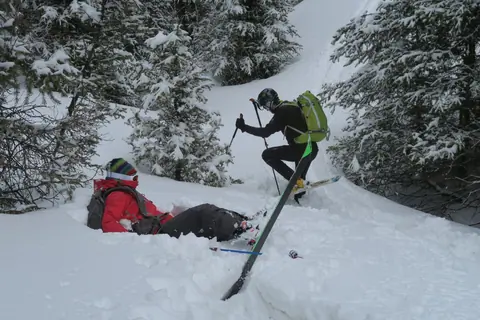
Our first and single biggest objective is the reduction of risk to health and safety as far as is practically possible.
Nomad’s Land has a health & safety policy which can be found below together with how each of these policy points is implemented.
In the countries we suggest you visit, international standards are not applied for various reasons such as the lack of training, a rescue column, helicopter rescue, etc. This is why at Nomad's Land we take particular care in the choice of the guide team, the drivers and our local partners, but also the choice of the days that we offer you. Before your arrival, we will have tried to anticipate any problems that may arise during your stay.
We also have strong relationships with local communities, health care facilities and authorities such as National Park Rangers, Ministry of Emergencies, National Alpine Club, National Mountain Guides Association.
Our priorities are:
Information and Advice before you go
- Provide relevant health and safety information to all clients before they arrive in-country;
- Advise staff and clients to contact their doctors or travel clinics for immunisations before traveling;
- Check if insurance covers countries visited and save copy with urgent phone number;
- Provide proper kit lists and equipment information relevant to the trip;
- Provide information on the various environments to be visited, with respect to safety, local politics, culture, etiquette and social responsibility;
- We update this information on our website : https://nomadsland.ch/en/before-you-go/info
Staffing
- Ensure that appropriate qualified and/or experienced staff are employed in the regions where we operate and that all field staff and group leaders are trained in safe operating procedures.
- Ensure that all staff go through an on-site induction, which includes training in the relevant procedures, and a probationary period prior to being given responsibility over a group.
- Improve our operating procedure regularly in each area followed by meetings of all relevant staff to identify corrective actions.
When you arrive
- Safety information provided and relevant addresses of medical facilities and company personnel during a general briefing and also special briefings when required
Risk Assessments
- Identify the risks associated with activities and locations, as well as the development of measures to minimize these risks.
- Enlarge the database of risk assessments on location or trip.
- Ensure that all staff are aware of the risk assessments and how to fill in an incident form.
- Continually update and evaluate the risk assessments.
- Make clients aware of safe practices and risk assessments.
- Always use reliable and safe vehicles which have the required paperwork.
Activities
- Ensure trekking teams remain in contact with each other and that whistles, phones and torches are carried along with the first aid kit.
- Make sure clients understand the risks associated with additional activities such as horseback riding and hiking, or any hazardous activity, and ensure that all safety procedures are followed.
- Comply with all National Park codes of conduct, mountain safety codes of practise and applicable rules for entering areas where a safety policy exists.
- Make sure cooking and washing is done in boiled water, and that both staff and clients are encouraged to follow hygienic practices.
Evacuation and Emergency
- Ensure that there are adequate communication facilities provided to staff, either by mobile phone or satellite phone, and that applicable numbers are all known.
- Ensure that all staff are fully aware of where the nearest and best medical facility is.
- Ensure that clients are given telephone numbers of our local staff.
- All gap clients have access to a qualified medical person nearby and a member of staff who can provide immediate assistance.
- All teams must carry a first aid kit, and first aid kits are also kept in our various guesthouses.
- Ensure that all staff understand what to do in order to facilitate an evacuation which is either high priority (requiring immediate evacuation by helicopter), medium priority (fastest route to the nearest hospital) or low priority (most convenient and comfortable overland or over water route).
- Keep records of all incidents, accidents and emergencies.
- Carry out a post-incident evaluation to improve procedures in the future.