Pamiri's mazar
Pamiri mazars are small sacred sites found throughout the valleys of the Tajik and Afghan Pamirs, especially in the Wakhan.
Pamiri mazars are small sacred sites found throughout the valleys of the Tajik and Afghan Pamirs, especially in the Wakhan.

The April Revolution Memorial is a special place in the center of Bishkek that reminds people of the events of April 7, 2010, when 87 people died. On that day, many citizens took to the streets to express their dissatisfaction with the government. The protests were violent, and dozens of people gave their lives for change in the country.
Bishkek
Kyrgyzstan
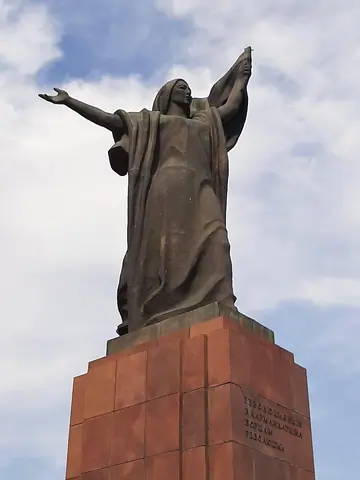
Erkindik Revolutionaries Square is located in the center of Bishkek. It is one of the city's important historical sites. The square was built during the Soviet era and is dedicated to the people who participated in the revolutionary events of the early 20th century in Kyrgyzstan and Central Asia. The main feature of the square is the Monument to the Revolutionaries, unveiled in 1978. It was created by the famous Kyrgyz sculptor Turgunbay Sadykov together with architect G. Kutateladze.
Bishkek
Kyrgyzstan
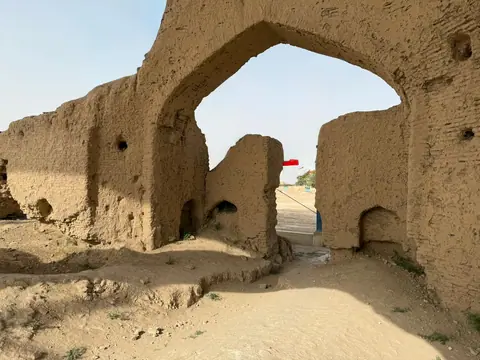
In the arid north of Afghanistan, not far from the city of Mazar-i-Sharif, a modest archaeological site draws the attention of scholars, mystics, and wanderers alike. The exposed foundations and weathered stone walls shown in this photo are believed by local tradition to mark the birthplace of Jalal ad-Din Muhammad Rumi—the 13th-century Persian poet, Sufi mystic, and philosopher whose verses still echo across the world.
Balkh
Afghanistan
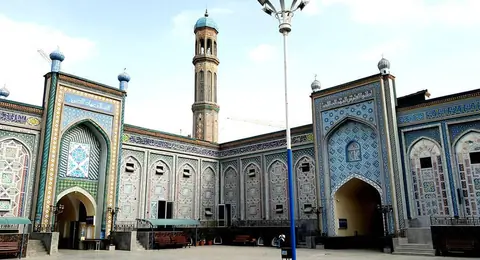
A remarkable landmark embodying the rich cultural heritage of the country.
The history of the mosque is closely intertwined with political and social changes in Tajikistan. Built in the 19th century, it has stood the test of time, serving as a center of attention for the Muslim community. After the collapse of the Soviet Union in 1991, the mosque underwent significant reconstruction, symbolizing the modern Islamic revival in the country.
Dushanbe
Tajikistan
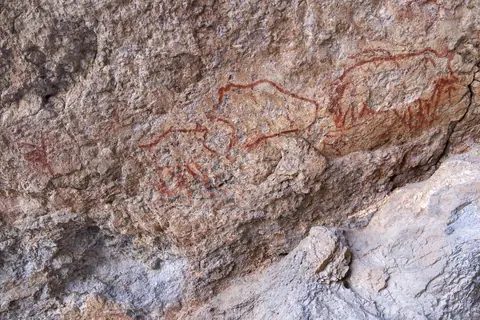
The Shakhty cave paintings, located at over 4,200 meters altitude in the Eastern Pamirs, near Murghab, are among the oldest examples of rock art in Central Asia. Discovered in 1958 by Soviet archaeologist Vladimir Ranov, they depict a striking hunting scene painted in red pigment derived from local iron oxide. The artwork shows a central figure—possibly a hunter or a shaman—wearing a bird-shaped mask and aiming at a wild boar, accompanied by yaks and a bear, some of which are pierced with arrows.
Murgab
Tajikistan

El-Nur Handicraft Center - Preserving Cultural Heritage through Creativity
El-Nur Craft Center is dedicated to the revival and preservation of cultural heritage items that carry the spirit of tradition and craftsmanship. We create unique products that combine aesthetics and functionality, inspired by national culture and history.
Bukhara
Bukhara
Uzbekistan
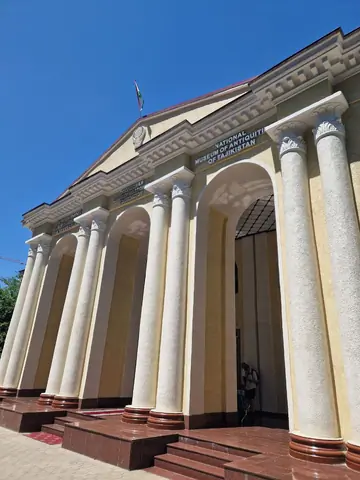
The National Museum of Antiquities of Tajikistan is the country's leading archaeological and cultural-historical museum located in the capital Dushanbe. It was founded in 1934 as the Exhibition of Achievements of National Economy and Archaeological Research of the Tajik Base of the USSR Academy of Sciences. In 1996, the museum was renamed the National Museum of Antiquities of Tajikistan, and in 2001 it opened in a new two-story building in the center of Dushanbe.
Dushanbe
Tajikistan
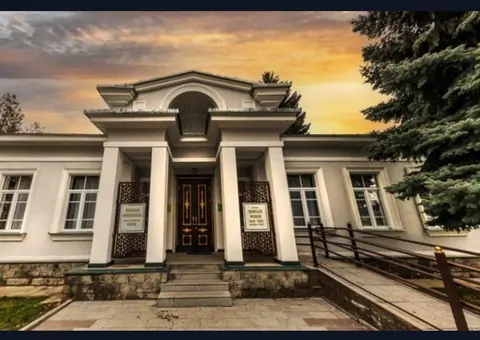
Zhambyl Zhabaev (1846-1945) was an outstanding Kazakh akyn (folk improvisational poet) who lived for almost 100 years and became a symbol of Kazakh oral poetry. He was a continuer of the tradition of zhyrau (steppe storytellers) and went down in history as one of the most famous performers of aytys (poetic competitions). Zhambyl was born near modern Taraz (the city was formerly called Aulie-Ata) and devoted his entire life to glorifying his native land, folk wisdom and heroism.
Taraz
Jambyl Region
Kazakhstan
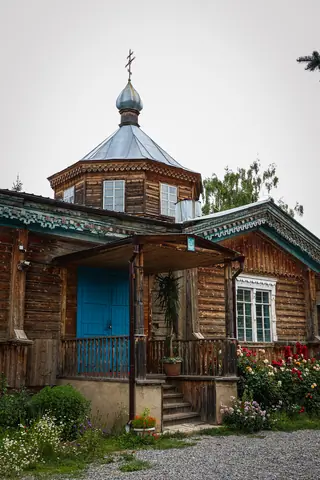
The church in the village of Teplokluchenka, located in the Ak-Suu district of Issyk-Kul province, is an important historical and cultural monument reflecting the multi-layered history of this region. The village of Teplokluchenka, also known as Ak-Suu, has long been a place where different cultures, religions and ethnicities intersected. The church, built in the late 19th and early 20th centuries, is one of the symbols of the Orthodox presence in Kyrgyzstan.
Teploklyuchenka
Kyrgyzstan