The history of Mongolia merges with the history of nomadic peoples who populated the steppes of Central Asia.
History
The history of Nepal has been influenced by its position in the Himalayas and its two neighbours, modern day India and China.
Many archaeological sites are discovered from the Stone Age (in the mountains of the Balkan Mountains), then as early as 6000 BC. Agriculture leaves his first tracks.
The story as culture is strongly marked by the passage of Alexander the Great after submitting the Scythians in 329 BC. AD Then the territory of Tajikistan shall be submitted by the Mongol Empire (and later named "Mogul Empire").
The earliest ancestors of the Kirghiz people, who are believed to be of mixed Mongol and Kipchak descent, probably settled until the 10th century around what is now the Tuva region of the Russian Federation.
The Uzbek history is marked by two great empires. The Persian Empire left a great legacy to the sedentary lifestyle. The Uzbek origin is unclear, but would have taken its name from a small son of Chengis Khan.
Bash Gumbez
Image
Height
810
Width
1080
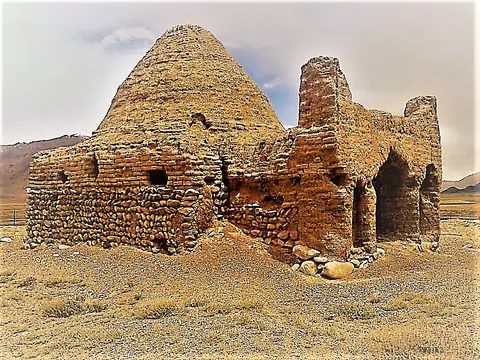
Bash Gumbez is a ancient caravanserail 30km east from Alichur. There is a small village and a graveyard on the other side of the river. The site is situated in the valley of Chukury, 28km lower than the pass Bashgumbez (4815m. alt) which let to reach the Zorkul zone and the Pamir river.
Murgab
Tajikistan
Ala Myschik cave
Cave Ala Mischuk is located in the crevice of the mountain Ala Mishchuk, which is in the western part of Naryn. The main cave has an impressive hatch 40 meters high. The side caverns extend to the east and west of the main room.
Naryn
Kyrgyzstan
Türkmenabat
Image
Height
600
Width
900
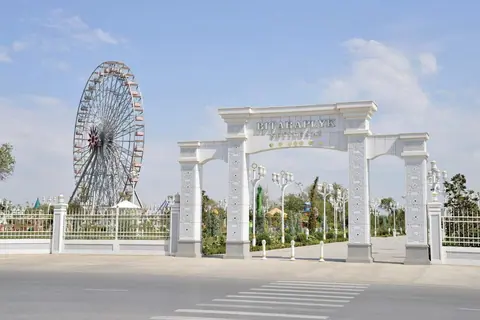
Türkmenabat second-large city in Turkmenistan. Till 1924 and in 1927-40 the city had the name Chardzhuy, in 1924-27 Leninsk, in 1940-92. Chardzhou, in 1992-99 Chardzhev.
The great Silk way has played a huge role in the history and lives of this city. The grotto of Amul-this first name of Türkmenabat was one of important points, a reliable haven on this well-known road, also. Later it has been postponed also for the Construction Department river. She began to be called Amu Darya that is meant by the Amu-river.
Türkmenabat
Turkmenistan
Great Silk Road
Image
Height
1944
Width
2592
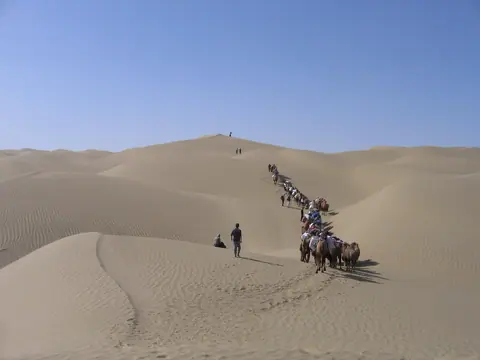
The ancient Silk Road was a dirty road, which was originally used to spread silk from China all over the continent. The silk was in this time a very expensive, but useful product. In 121 BC the first camel caravan loaded with silk started. But soon, there were as well many other outlandish products being transported on the Silk Road. Together with the silk camels carried Indian gerns, Iranian silver jewery, rich cloths from Byzantium, Baltic amber, Mediterranean corals, ceramics, grapes, nuts and many others goods.
Kyrgyzstan
Kyrgyzstan