Before you rely on this address
Directory information changes faster than destination history. Opening hours, contacts, services, prices and access can shift without warning.
Directory information changes faster than destination history. Opening hours, contacts, services, prices and access can shift without warning.
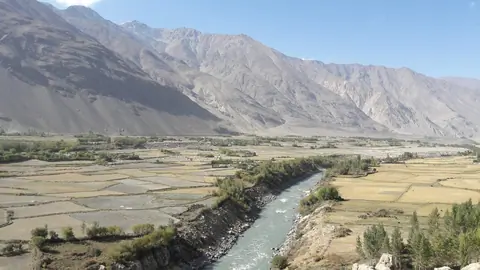
Nestled in the remote and breathtaking Wakhan Valley of Tajikistan's Gorno-Badakhshan region, the ancient Khakhka Fortress (also known as Qah Qaha, Kaahka, or Kah-Kakha) stands as a dramatic sentinel above the village of Namadgut. Perched on a massive natural cliff overlooking the swirling Panj River—which forms the international border with Afghanistan—this crumbling citadel dates back to around the 3rd–2nd century BCE, during the height of the Kushan Empire and the flourishing of the Silk Road.
Ishkashim
Tajikistan
Customs rules in Tajikistan are not only about obvious prohibited items.
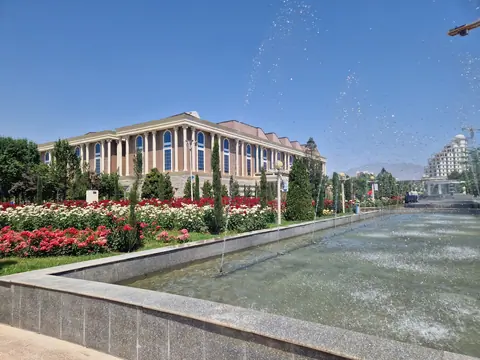
The National Museum of Tajikistan in Dushanbe is the country’s most important cultural institution—an elegant architectural landmark and a gateway into the rich history of the Tajik people. Designed with a blend of modern aesthetics and traditional Central Asian motifs, the museum offers travelers an immersive experience across 24 exhibition halls spanning archaeology, natural history, fine arts, and ethnography.
Dushanbe
Tajikistan
Pamiri mazars are small sacred sites found throughout the valleys of the Tajik and Afghan Pamirs, especially in the Wakhan.
Tucked high in the mountains of eastern Tajikistan, along the rugged spine of the Pamir range, lies one of Central Asia’s most isolated and fascinating cultural landscapes.
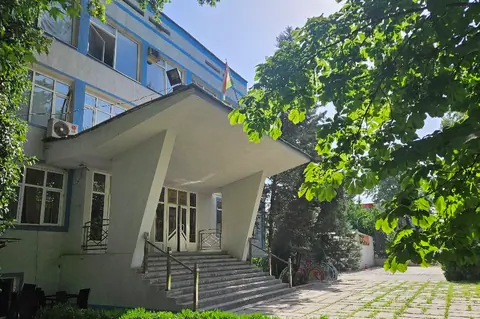
Better than any other art gallery in the city, but strangely not very well known due to lack of communication, this is the place to visit in Dushanbe for those interested in contemporary art.
The Art Foundation (or Art Academy), located in a dilapidated Soviet-era building, concentrates a large number of art studios. Painters, sculptors, and masters of applied arts gladly welcome visitors.
An ideal place where you can directly meet contemporary artists among their works, with the possibility to buy.
Dushanbe
Tajikistan
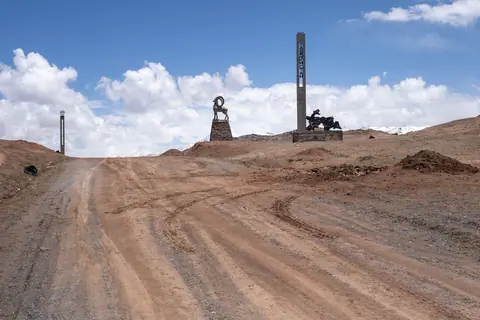
The Tajik border post of Kyzyl Art, between Kyrgyzstan and Tajikistan, is located at an altitude of 4,206 meters, less than 2 km south of the Kyzyl Art Pass, which sits at 4,288 meters and marks the geographical border. The border post is open year-round but may close for a few days in winter to clear newly fallen snow. It is situated in the Zaalaisky Range, dominated by Lenin Peak, and on the M41 highway, a legendary route known to motorcyclists.
Kyzyl-Art
Tajikistan
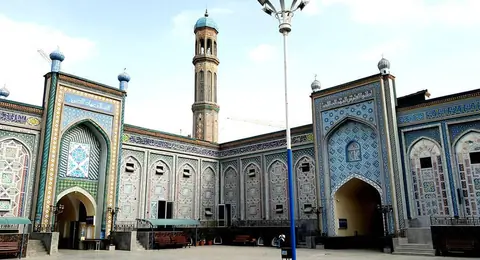
A remarkable landmark embodying the rich cultural heritage of the country.
The history of the mosque is closely intertwined with political and social changes in Tajikistan. Built in the 19th century, it has stood the test of time, serving as a center of attention for the Muslim community. After the collapse of the Soviet Union in 1991, the mosque underwent significant reconstruction, symbolizing the modern Islamic revival in the country.
Dushanbe
Tajikistan
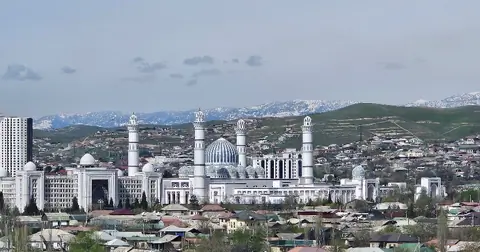
The Central Cathedral Mosque of Dushanbe, named after Imam Abu Hanifa, is the second largest mosque in Central Asia after the Hazrat Sultan Mosque in Astana.
It was inaugurated on June 09, 2023 by the President of Tajikistan Emomali Rahmon together with the Emir of Qatar Sheikh Tamim bin Hamad Al Thani, who donated part of the funds for the construction of this magnificent complex.
Dushanbe
Tajikistan