Before the encounter
Good travel in Mongolia starts before the camera comes out. Customs, dress, hospitality, sacred places and family spaces can change by region and situation.

Khanbumbat Airport, also known as Oyu Tolgoi Airport, is located in Khanbogd, Ömnögovi, Mongolia. The airport's construction was financially supported by the adjacent Oyu Tolgoi mine, a major mining project in the region. Oyu Tolgoi is known for its significant copper and gold deposits.
Khanbumbat
Ömnögovi
Mongolia
Ovut Airport, located in Ovut Tolgoi, Omnogovi Province, is a key air transportation point for the mining complex in the region. Serving domestic scheduled air services, it is an important link in the transportation infrastructure and provides accessibility and connectivity for local residents and businesses.
Ovoot Tolgoi
Ömnögovi
Mongolia
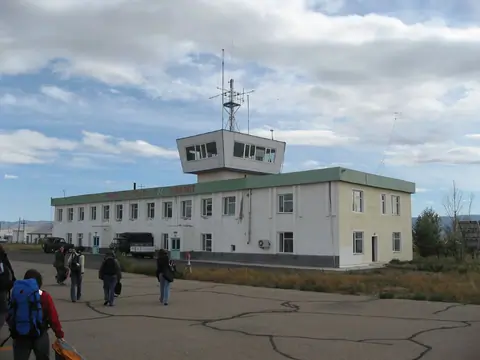
Muren Airport, centrally located in the city of Muren, has grown from a humble military airfield during the Mongolian People's Republic to a modern civilian airport. Handling domestic and international flights with ease, this airport serves not only as a hub for air traffic, but also as a symbol of development and excellence in Mongolia's aviation industry.
Mörön
Khövsgöl
Mongolia
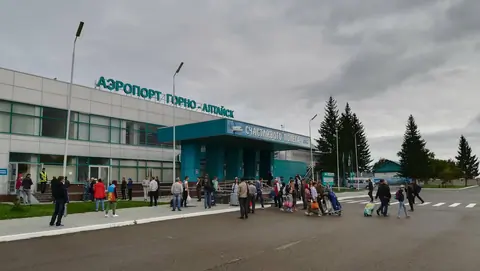
Altai Airport, located in Mongolia and serving the city of Altai, is an important air hub of this region. Despite its modesty, it plays a key role in providing air connectivity of this place with other regions of the country.
The distance from the airport to the city center is only 3 kilometers, making it easily accessible to the passengers. Both scheduled and charter flights of various airlines are operated at this airport. Apart from this, the city of Altai has no other airports, making Altai Airport the only option for air travel.
Altai
Govi-Altai
Mongolia
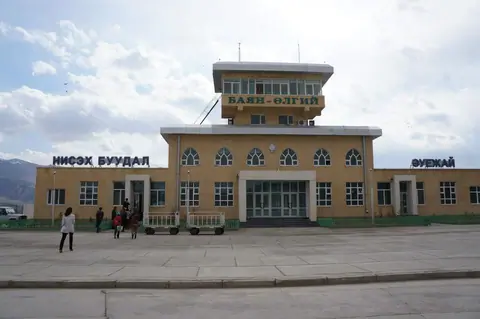
Ulgii Airport is a key transportation hub serving the city of Ulgii in Bayan-Ulgii aimag in Mongolia. Located just 5 kilometers from the city center, it is not only an important infrastructure facility, but also an important social and economic resource for the region.
The airport building consists of three floors providing convenient facilities for passengers. Special attention is paid to the comfort and safety of travelers: the waiting room on the first floor is equipped with everything necessary for a pleasant pastime before departure or after arrival.
Ölgii
Bayan-Ölgii
Mongolia
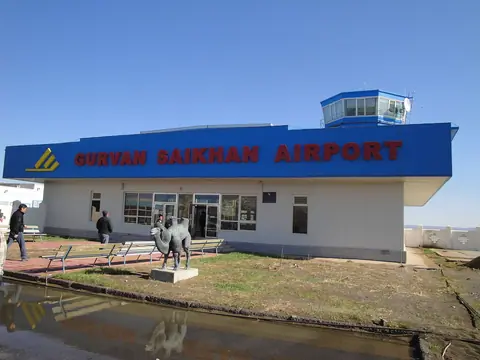
Gurvan Saihan International Airport, nestled in the desert abode of Dalanzadgad, serves as an important hub in Mongolia's domestic air transportation network. Located just a few kilometers from the city center, it is a symbol of modern technological development in this remote region.
Rising three stories high, the airport building has become a true symbol of progress since its complete renovation in 2007. Equipped with advanced technology, it is ready to welcome and see off its passengers in comfort and safety.
Dalanzadgad
Ömnögovi
Mongolia
Khumiy throat singing is a distinctive art form exclusive to select nationalities, including Mongols, Buryats, Kalmyks, Tuvans, Altaians, and Bashkirs.
The most interesting thing about a camel is its two humps, covered with a thick layer of thick hair. It is a reliable protection against temperature fluctuations, strong and cold winds, and dust and sand storms.
The Gobi Desert is the sixth largest desert in the world and the second largest in Asia.
Good travel in Mongolia starts before the camera comes out. Customs, dress, hospitality, sacred places and family spaces can change by region and situation.