Field guide
Kyrgyzstan's protected areas: a guide reference
A short French booklet introducing eight reserves through their landscapes, plants and animals. Explore the original AFKE publication with an English page guide, and use it as a historical starting point for local interpretation.
French · 5 pages · PDF · 417.99 KB
Start with this
Tell the story of a place through what it protects
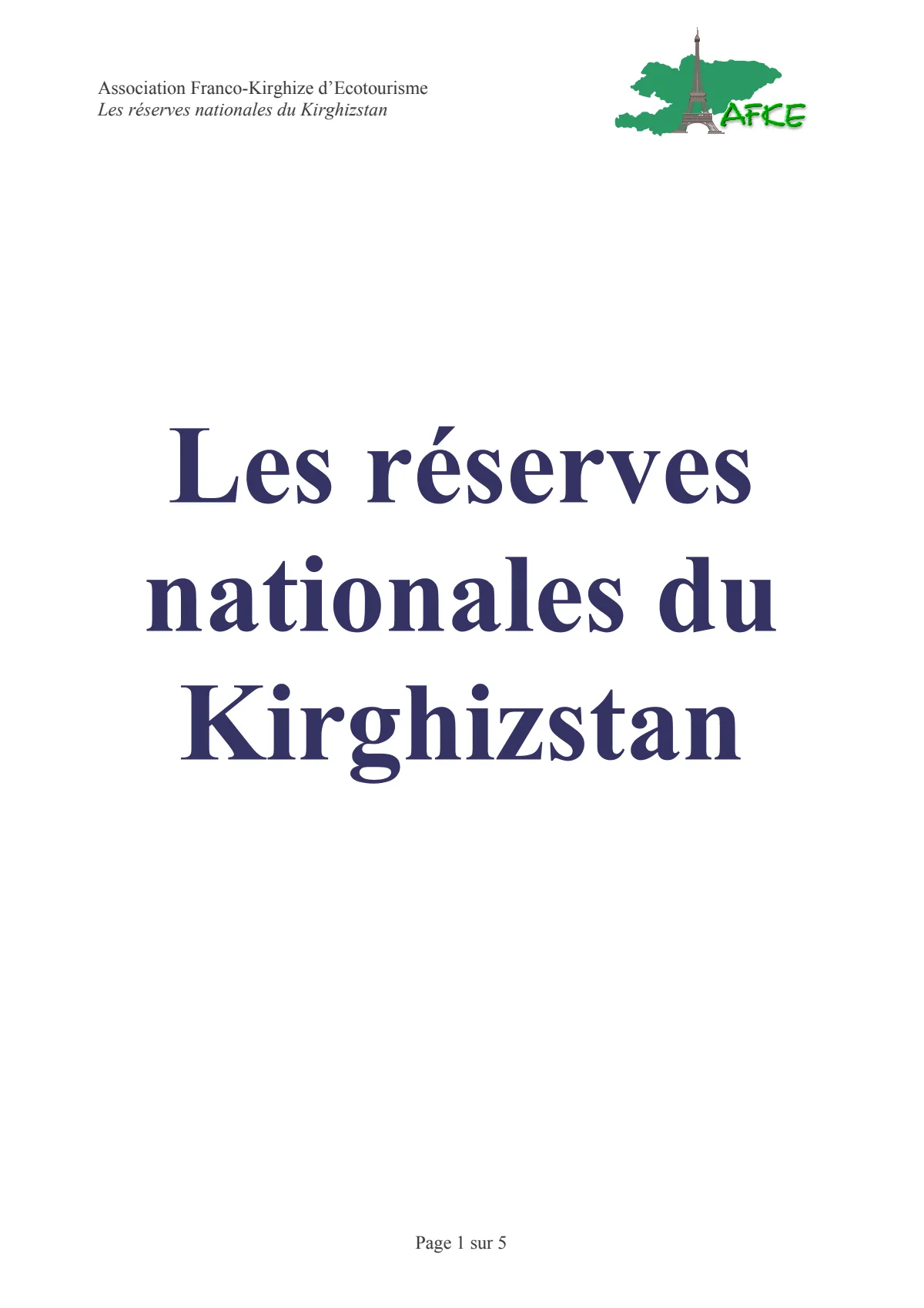
The Padysh-Ata entry connects the reserve's landscape to water, vegetation and animals. That structure is useful for preparing an explanation on a journey, even though the booklet's figures and designations need to be checked against current information.
Discussion prompt
For a place on your route, what landscape, plant or animal would help visitors understand why it is protected?
Source: page 3 of the guidebook.
Find your starting point
Inside the material
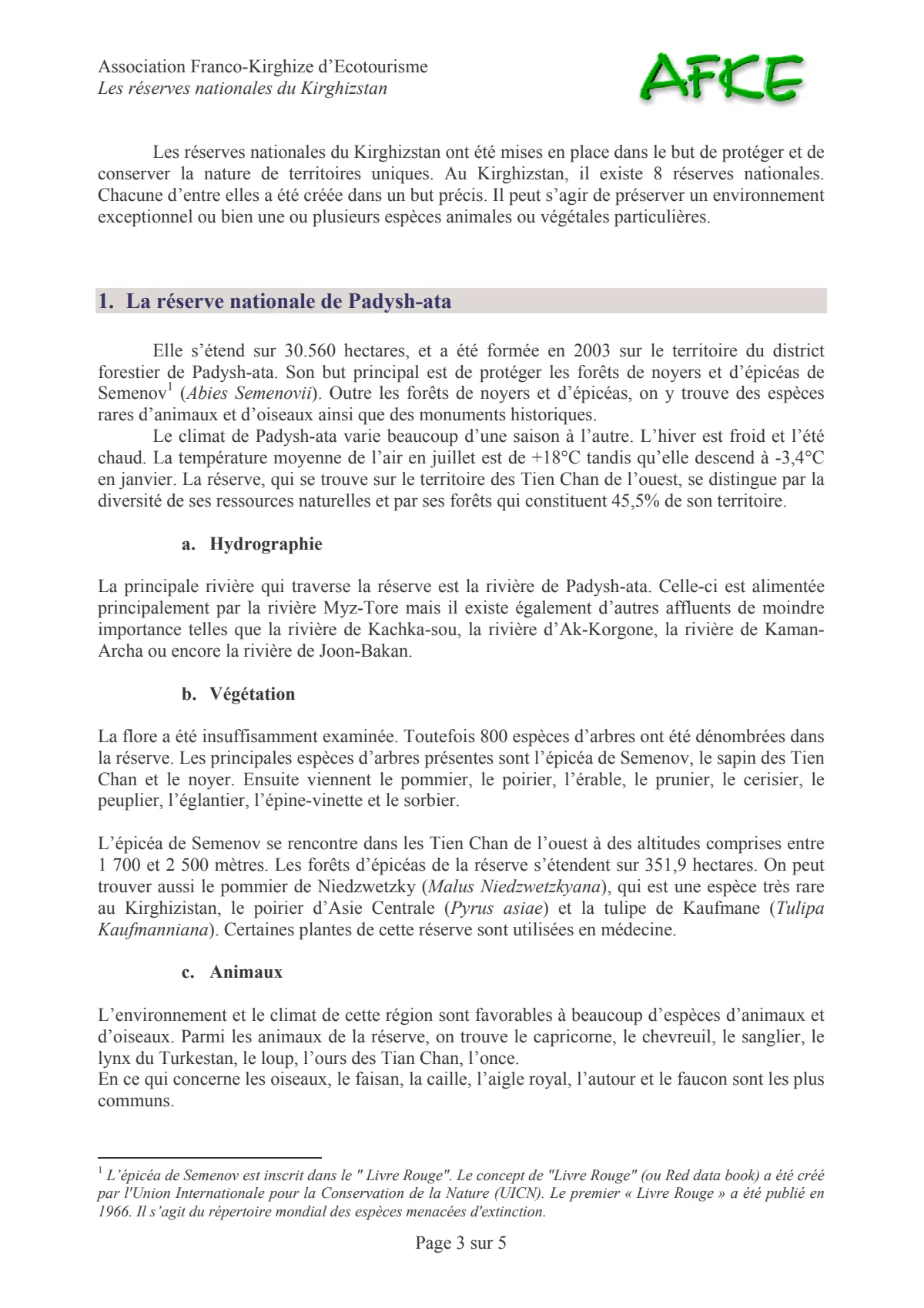
Choose a section to inspect a sample page. The full PDF opens only when you follow a PDF link.
Find a reservep. 02
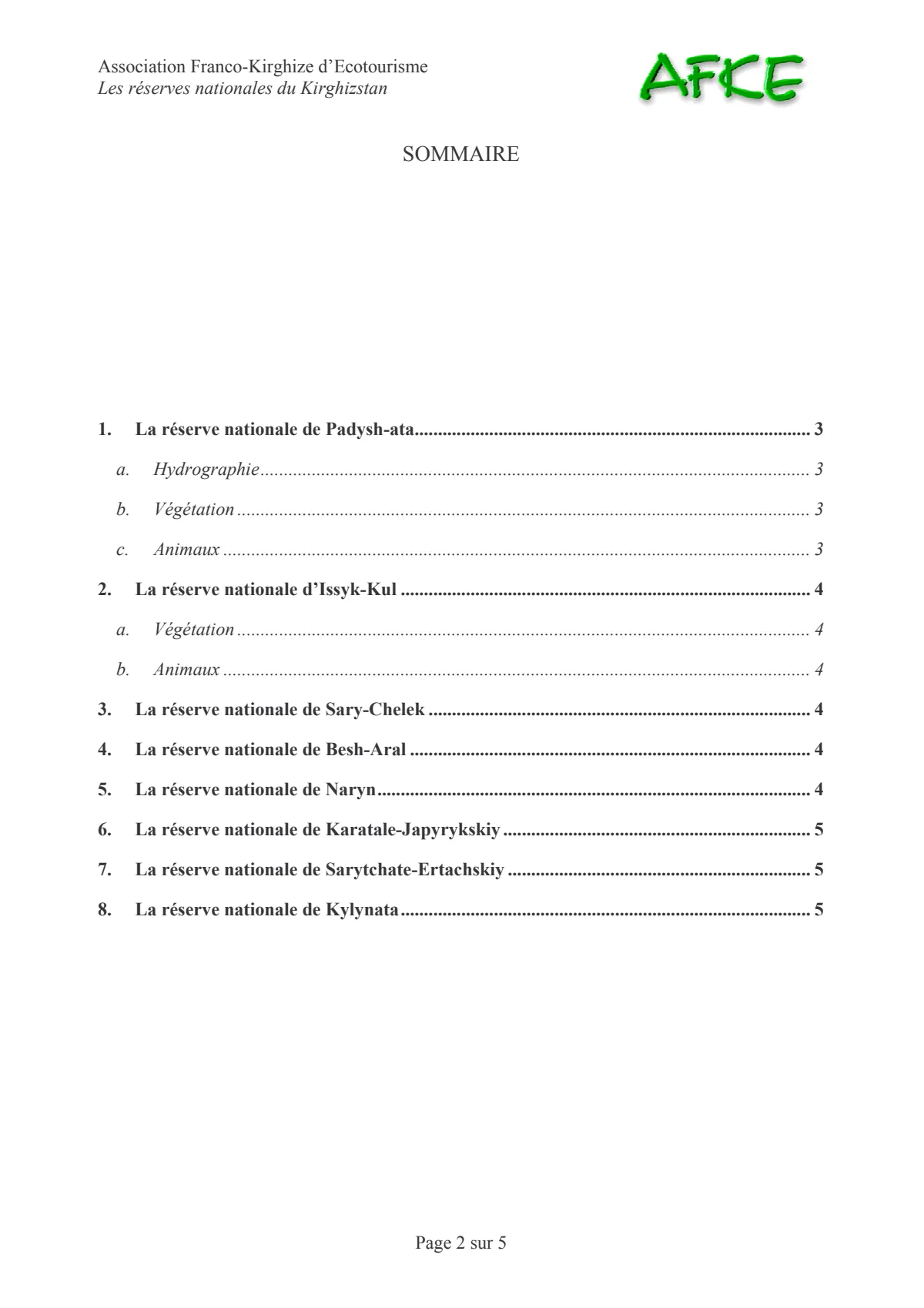
Padysh-Atap. 03
Issyk Kul, Sary-Chelek, Besh-Aral and Narynp. 04
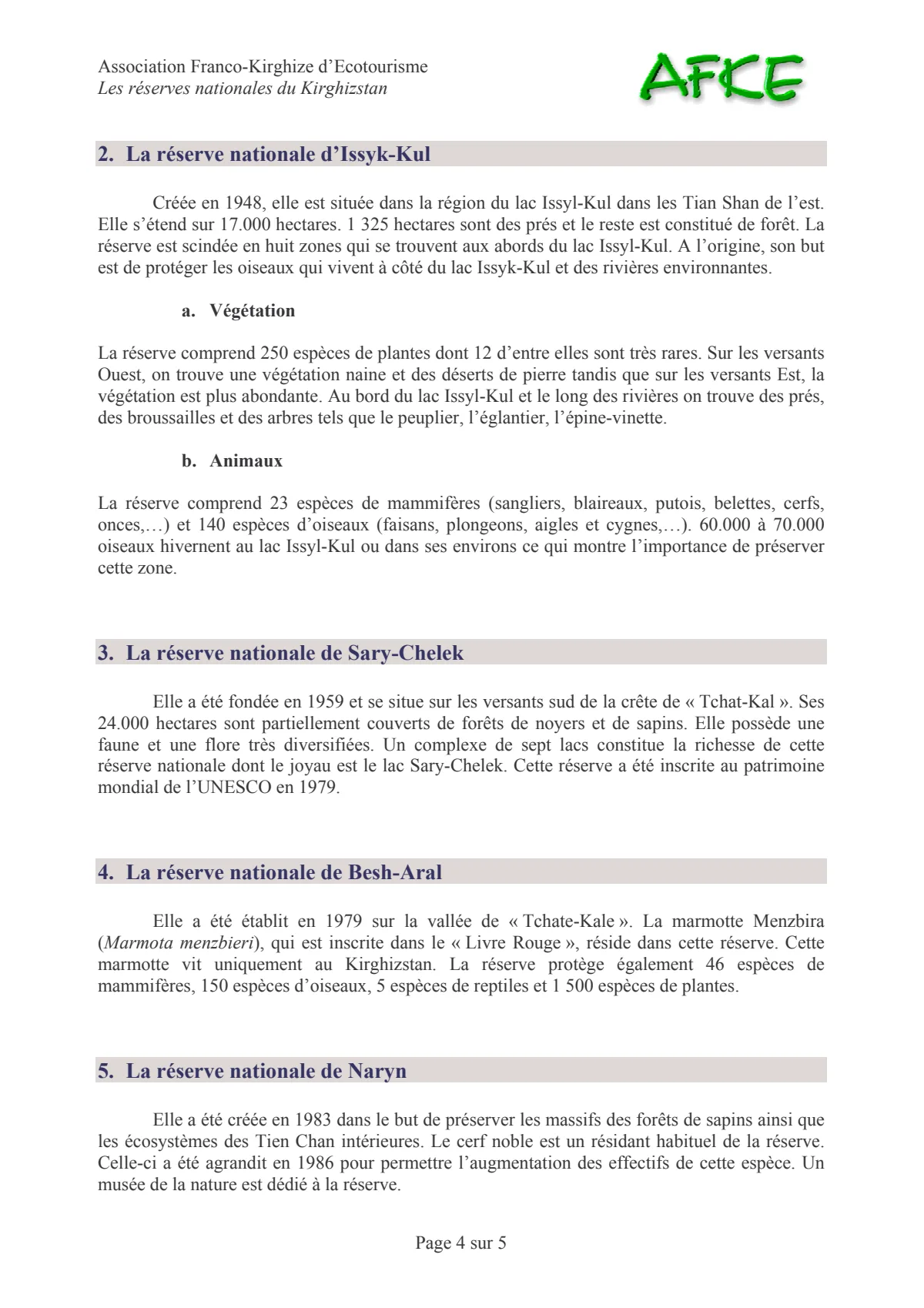
Karatal-Japyryk, Sarychat-Ertash and Kyrgyz-Atap. 05
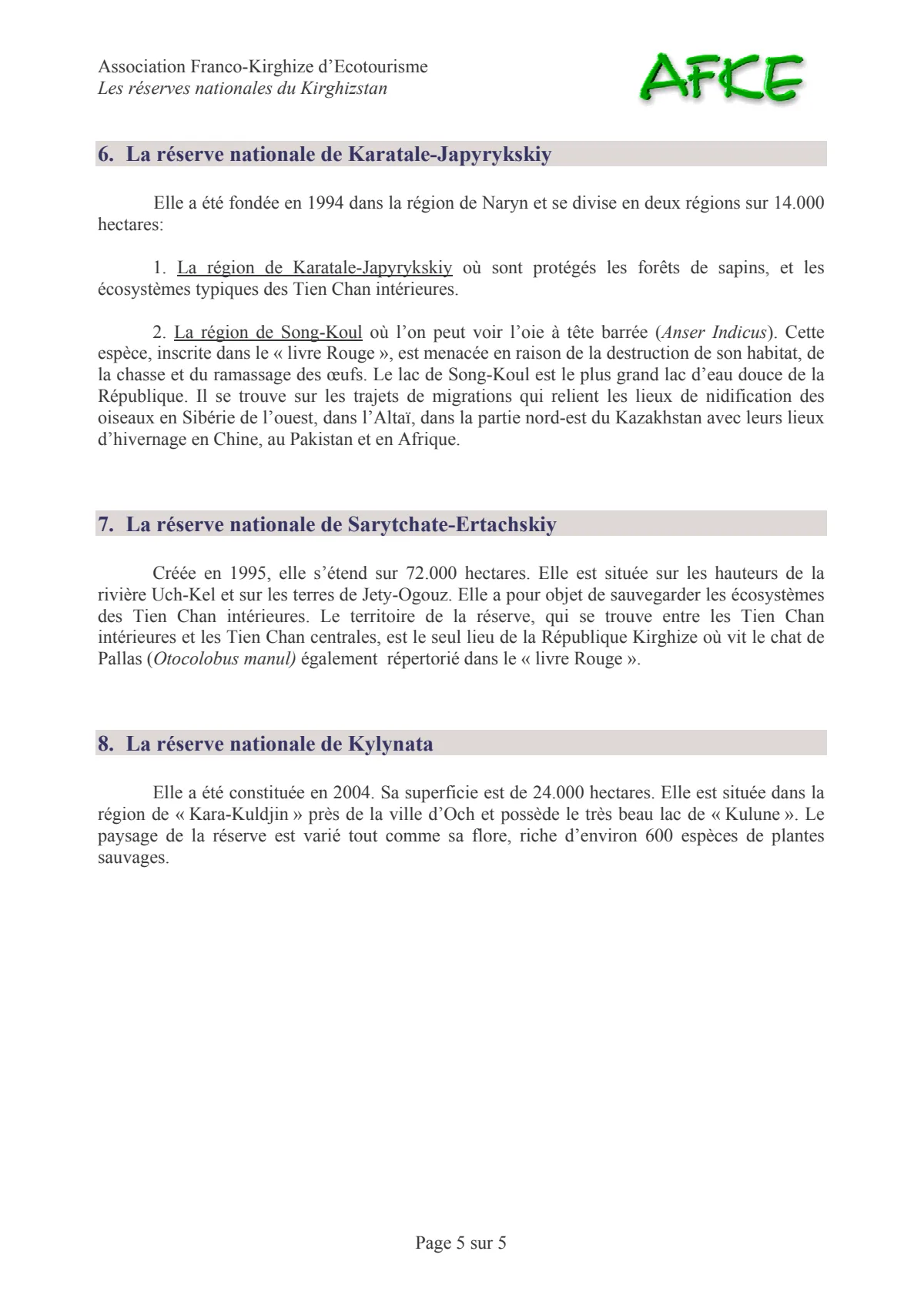
Original five-page French booklet, Les réserves nationales du Kirghizstan, credited to the Association Franco-Kirghize d'Ecotourisme (AFKE). No publication date is printed. Its count of reserves, boundaries, species figures and designations are historical source claims, not a current inventory. Consult current local information before planning a visit. English page descriptions and the discussion prompt are editorial additions.
Use together
Supporting material
Resource record
- Educational use
- Historical background and local interpretation preparation