Historical Site
Tash Hauli
- Place type
- Historical Site
- Elevation
- 100 m
Field notes
The field account
Toshhovli Palace (Uzbek: Toshhovli saroyi, meaning “Stone Courtyard Palace”) is one of the most impressive royal residences in the historic city of Khiva. Located inside the walled inner town of Itchan Kala, the palace was built between 1830 and 1838 during the reign of Allakuli Khan, one of the most powerful khans of the Khiva Khanate. The khan ordered its construction because he wanted a residence that was more private and luxurious than the older royal citadel, the Kunya Ark.
The palace complex consists of more than 150 rooms organized around nine courtyards, surrounded by high walls that ensured privacy for the ruler and his family. Toshhovli served mainly as the harem and living quarters of the khan, where his wives, children, and servants resided. One of the most remarkable sections is the Harem courtyard, where each wife of the khan had her own richly decorated apartment. The reception hall, known as the Mehmonhona, was used for official meetings and ceremonies, showing the prestige and authority of the khan.
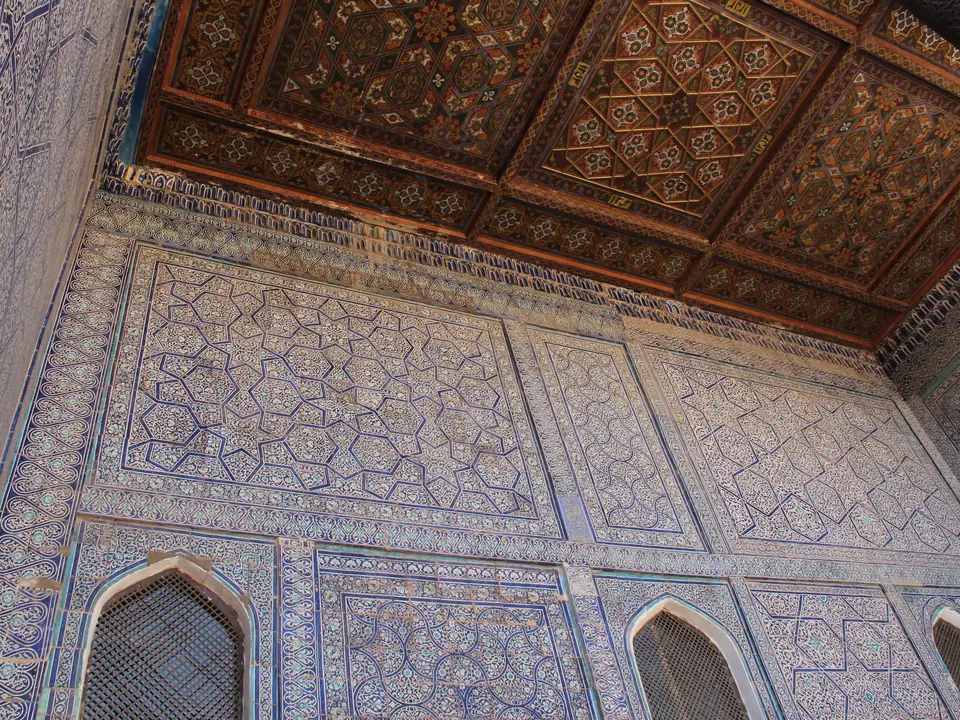
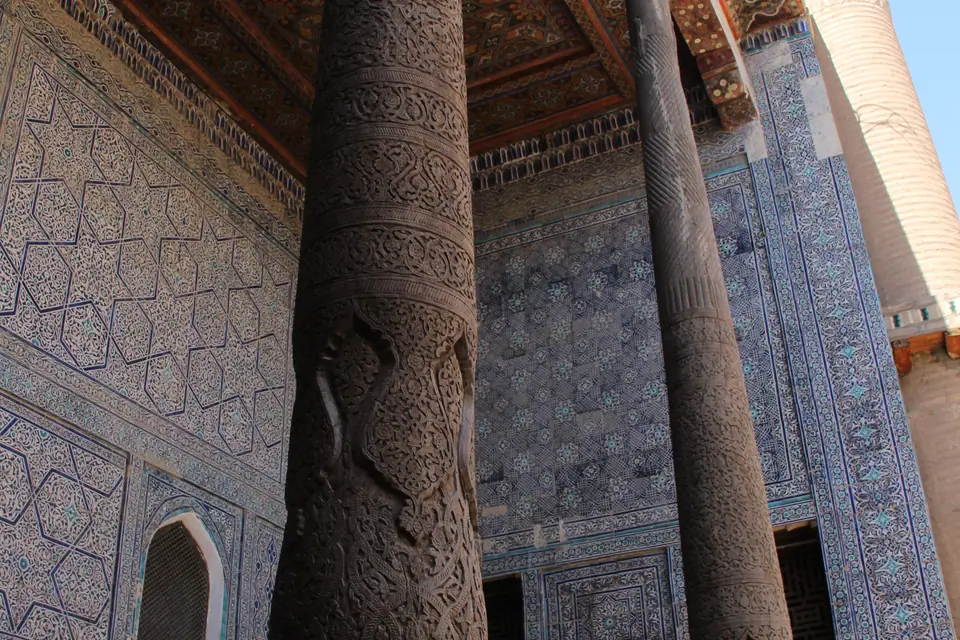
Architecturally, Toshhovli is famous for its refined decoration and craftsmanship. The interiors display some of the finest examples of Khivan artistry: carved wooden columns, delicate ganch (stucco) ornamentation, colorful ceramic tiles, and elegant lattice windows that filter the desert light. The ceilings are richly painted, and the courtyards are framed by graceful ivans (open columned halls). Compared with the more defensive-looking structures in Khiva, Toshhovli reflects the comfort, elegance, and artistic sophistication of the Khiva court in the 19th century.
Today the palace is part of the UNESCO-listed heritage of Khiva, within the historic ensemble of Itchan Kala. For visitors, it offers a fascinating glimpse into the private life of the Khivan khans, allowing travelers to walk through courtyards where court ceremonies once took place and admire some of the most beautiful decorative art in Central Asia. When visiting, take time to observe the intricate wood carvings and tile patterns—many of them were handcrafted by the finest artisans of Khorezm and remain remarkably well preserved.
Map margin
Where it sits
Visual field notes
A closer look