Islam Khoja Complex
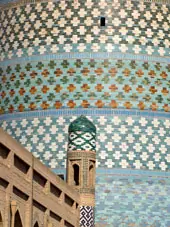
Complex of Islam Khodja is the most recognizable buildings of the ancient city of Khiva, built only in the years 1908-1910 and in form goes back to the structures of XI-XII centuries.
Khiva
Khorezm
Uzbekistan
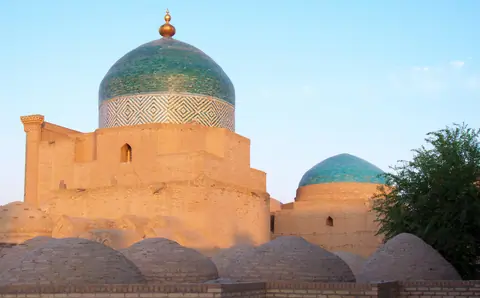
Complex of Islam Khodja is the most recognizable buildings of the ancient city of Khiva, built only in the years 1908-1910 and in form goes back to the structures of XI-XII centuries.
Khiva
Khorezm
Uzbekistan
The mausoleum of Mahmoud Pahlavan is an architectural complex in Khiva, one of the best works of Khiva architecture of the middle of the XIX century, made in the traditions of Khorezm architecture up to the Timur era. The mausoleum of pahlavan Mahmoud (1247-1326) has long been considered a sacred place where Uzbeks, Turkmens, Karakalpaks and representatives of other peoples made and made pilgrimages. According to the Will, pahlavan Mahmoud was buried in his own leather tanning workshop. Over time, a revered place of pilgrimage appeared here, and later a complex named after him appeared.
Khiva
Khorezm
Uzbekistan
This mosque is the oldest of the 157 mosques in modern Tashkent and the third largest mosque in Uzbekistan after the Bibi-Khanum Mosque in Samarkand and Poi-Kalyan in Bukhara. From the 15th century to the present, the mosque bears the name of one of the Sufi leaders of the Eastern Middle Ages - Khoja Akhrar Vali, who presented the city with a building built on the foundations of the former Djuma Mosque (Djuma Mosque - Friday Mosque) in 1451.
Tashkent
Tashkent
Uzbekistan
Palace of Tash Hovli was built at the end of the XIX century. The structure of the palace were 163 rooms and three separate courtyard leading to the guest part, to the courtroom and to the harem.
Khiva
Khorezm
Uzbekistan
Kounia Ark served as the residence of the khans, with a mosque, the court, an arsenal, a prison, a powder factory, kitchen facilities, a hall for official receptions, a mill and other buildings.
Khiva
Khorezm
Uzbekistan
Mausoleum of Said Allaoudin was built over the burial of a famous mystic Order Naqshbandi Sheikh Seyid Alauddin, who died in 1303. Estimated date of construction of the mausoleum middle of the 14th century.
Khiva
Khorezm
Uzbekistan
Khiva
Khorezm
Uzbekistan
Madrasah of Khan Mukhammad Amin was built in 1851-1854 years by order of the ruler of Khiva and got its name.
Khiva
Khorezm
Uzbekistan
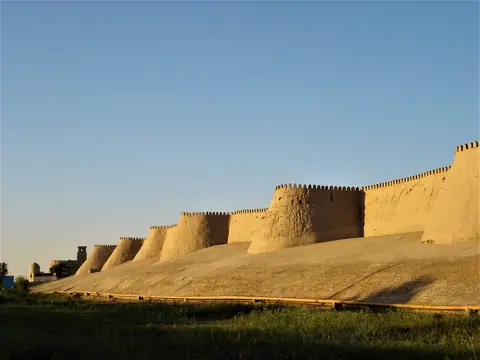
Ichan-Kala Citadel preserves the image of the ancient eastern city of Khiva. The findings of archaeologists suggest that Old Khiva, which already existed in the 5th century, served as a stage on the Great Silk Road. The old city, located inside the walls of Itchan-Kala, occupies an area of about 30 hectares and is surrounded by a massive wall of 6-8 meters. Ditches were dug on the outer side of the walls, which were filled with water. Also in the fortress wall there are four gates, reinforced with shock towers and complemented by viewing galleries.
Khiva
Khorezm
Uzbekistan
Lyab-i Hauz is a real treasure of Bukhara - there is a whole architectural ensemble consisting of a mosque, a madrassah and a monument in honor of Khoja Nasreddin - a favorite character of eastern folklore. The area is surrounded by a beautiful clean pond with a fountain. It was Lyab-i Hauz that became a favorite place for various mass celebrations and holidays in Bukhara.
Bukhara
Bukhara
Uzbekistan