Image
Height
683
Width
1024
Step back in time as you explore ancient cities and archaeological treasures. Each site offers a unique glimpse into the rich historical tapestry that has shaped Central Asia.
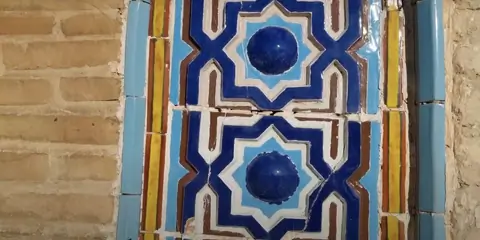
Excursions to Uzbekistan do not ignore this building in Samarkand, as it is one of the first buildings in the city, erected under Tamerlane. Its architecture and exterior design are ascetic - you won't find bright colors and traditional mosaics here. The relics of a famous saint of Islam rest in the mausoleum, which spent its entire life in constant asceticism and pilgrimage. We are talking about Sheikh Burkhanaddin Sagaraji, who for some time even acted as a spiritual mentor to Tamerlane himself.
Samarkand
Samarkand
Uzbekistan

The history of the Cathedral of the Assumption is unique in that it was once a small cemetery church, called the Church of St. Panteleimon. In the middle of the last century, work to expand the temple began. In the 30-40s of the last century, the temple was closed, and its premises were used for the needs of the hospital. After the end of World War II, the church was consecrated in the name of the Assumption of the Blessed Virgin and was named the capital's main Orthodox cathedral.
Tashkent
Tashkent
Uzbekistan
Against the background of familiar Tashkent-looking blue domes and minarets, the Gothic silhouette of the Cathedral of the Sacred Heart of Jesus, unusual for Central Asia, stands out - this is the main Catholic cathedral in Uzbekistan , known to local residents as the "Polish Church". It is worth saying that Christianity began to spread on the territory of Central Asia in the first centuries of our era due to the development of the Silk Road.
Tashkent
Tashkent
Uzbekistan
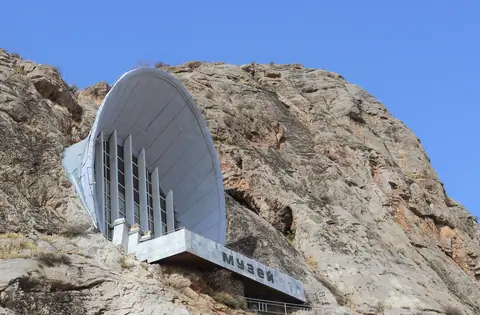
Sulaiman-Too Sacred Mountain dominates the Fergana Valley and forms the backdrop to the city of Osh, at the crossroads of important routes on the Central Asian Silk Roads. For more than one and a half millennia, Sulaiman was a beacon for travellers revered as a sacred mountain.
Multi-temporal and heterogeneous monuments dating from the Neolithic to the late Middle Ages inclusive form Historical-archeological complex Sulaiman-Too.
Osh
Kyrgyzstan
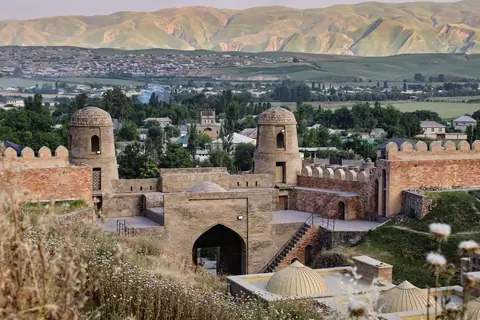
Hissor (or Hissar, Gissar) is situated 27 km southwest from Dushanbe and 8 km south from Hissor city is one of the main historical site of Tajikistan and includes : Hissar fort with ark built in XVI century; the Registan square; old madrassah-i Kuhna built in XVI century and its museum and another madrassah built in XVIII century; a caravanserai built in 1808; the mosque Sangin; the mausoleum of Mahdumi Abzam built in the XVI century, over the grave of Khdja Muhhamad Haivoki.
Hisor
Tajikistan
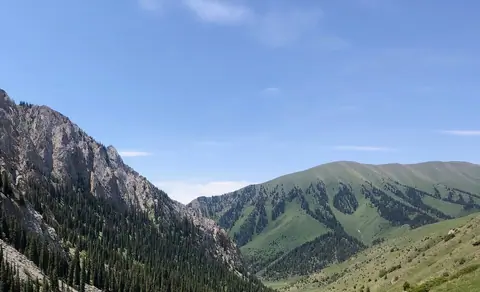
Karatal-Zhapyryk reserve was organized in 1994 in the Naryn region in order to preserve unique natural resources, as well as rare species of animals and plants. According to the classification of the International Union for Conservation of Nature, the reserve is assigned category I - strict nature reserve.
Kochkor
Kyrgyzstan
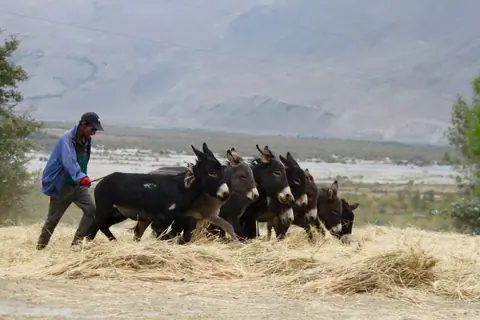
Yamchun is a tajik village 90 km upper than Ishkashim village and 2 km lower than Vrang village. It stand on the shore of the Panj river and at the border of the Wakhan corridor, just in front of the Afghan Yamit village. The village was built at the foot of the fortress with the same name and the hot springs of Bibi Fatima Zahro. The fortress was built from the 3rd century BC, but human sign in this region are older.
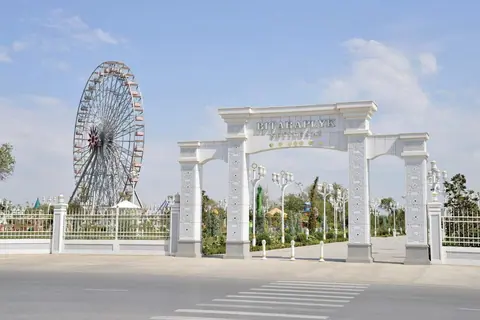
Türkmenabat second-large city in Turkmenistan. Till 1924 and in 1927-40 the city had the name Chardzhuy, in 1924-27 Leninsk, in 1940-92. Chardzhou, in 1992-99 Chardzhev.
The great Silk way has played a huge role in the history and lives of this city. The grotto of Amul-this first name of Türkmenabat was one of important points, a reliable haven on this well-known road, also. Later it has been postponed also for the Construction Department river. She began to be called Amu Darya that is meant by the Amu-river.
Türkmenabat
Turkmenistan
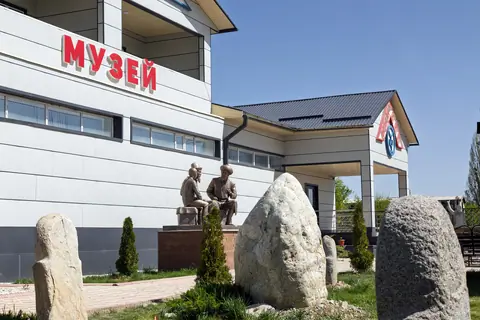
The Orgochor Historical Museum is a unique place where the memory and spirit of the region's past are preserved. The museum is a cultural centre where exhibits reflecting the history, traditions and everyday life of the local people are collected. You can see artefacts dating back to different historical periods, as well as learn about the development of Orgochor and its surroundings.
Orgochor
Kyrgyzstan
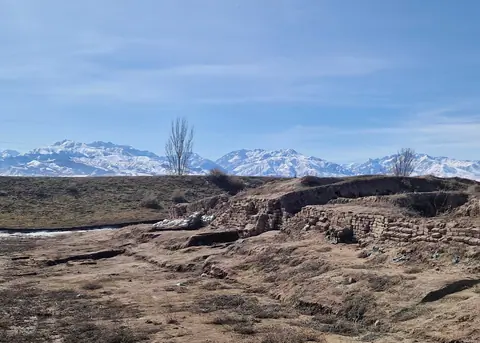
The ruins of the ancient city of Ak-Beshim are located south of Tokmok, near the village of the same name. It was here that the city of Suyab once stood—one of the most important centers of the Great Silk Road in the Chuy Valley.
In the 5th–10th centuries, Suyab was a major commercial and political city where caravans from China, Central Asia, and the Middle East converged. Merchants, diplomats, and travelers passed through its streets, and along with goods, ideas, religions, and cultures of different peoples spread here.
Ak-Beshim
Kyrgyzstan