Image
Height
683
Width
1024
Step back in time as you explore ancient cities and archaeological treasures. Each site offers a unique glimpse into the rich historical tapestry that has shaped Central Asia.
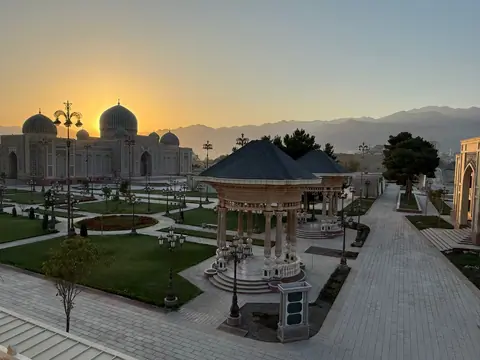
Nestled in the Fergana Valley, Khujand stands as one of Central Asia’s oldest living cities, its history stretching back over 2,500 years. Once a thriving Silk Road hub known as Alexandria Eschate—founded by Alexander the Great—the city retains layers of its past, from ancient fortresses to Soviet relics. Today, as Tajikistan’s second-largest city, Khujand pulses with the energy of its bazaars and the quiet grandeur of its monuments, offering a rare blend of antiquity and modernity.
Margib
Tajikistan

In the majestic Fan Mountains of Tajikistan, not far from the legendary Iskanderkul Lake, stands a striking peak known as the “Hat of the Great Alexander”. Officially named Rain Gauge “Dojdemernaya”, this mountain rises to 3,342 meters, dominating the southern shore of the lake with its steep, dramatic walls. Its unusual shape, reminiscent of a hat, is said to have inspired its legendary name.
Artuch
Tajikistan
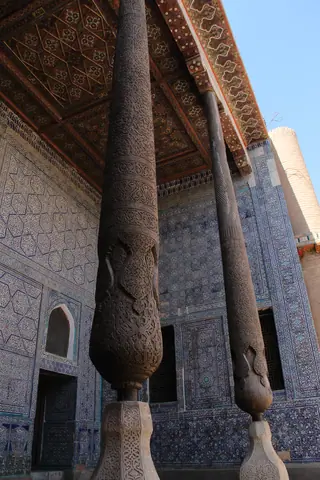
Toshhovli Palace (Uzbek: Toshhovli saroyi, meaning “Stone Courtyard Palace”) is one of the most impressive royal residences in the historic city of Khiva. Located inside the walled inner town of Itchan Kala, the palace was built between 1830 and 1838 during the reign of Allakuli Khan, one of the most powerful khans of the Khiva Khanate. The khan ordered its construction because he wanted a residence that was more private and luxurious than the older royal citadel, the Kunya Ark.
Khiva
Khorezm
Uzbekistan
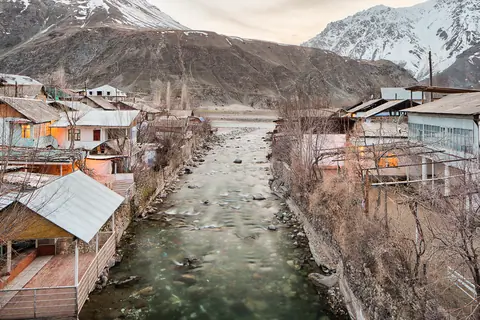
Qal'ai Khumb is a picturesque small town located in the Gorno-Badakhshan Autonomous Region of Tajikistan, along the Afghan border. Once the capital of the independent state of Darvoz, it now serves as the administrative center of the district bearing the same name.
The town is situated at the confluence of the Obi-Khumbob River and the powerful Panj River, which forms the natural border with Afghanistan and divides Qal'ai Khumb into two distinct parts: Qal'ai Khumb to the east and Darvoz to the west.
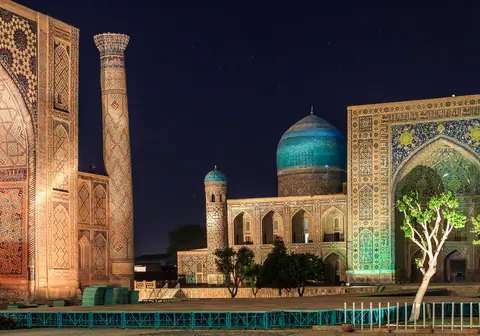
Samarkand is famous for its surprisingly long history - it is one of the oldest cities in the world, founded 8 centuries BC. In the old days, this city was the most important point connecting East and West, and the Silk Road passed through Samarkand. Therefore, here, as nowhere else, a huge number of cultural and historical monuments have been preserved - such as mausoleums, museums, mosques, the ruins of ancient settlements and much more.
Samarkand was proclaimed in 2001 by UNESCO crossroads of cultures and world heritage site.
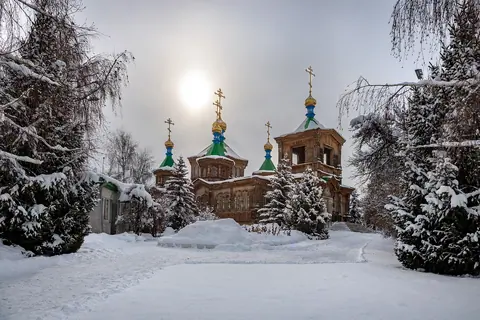
The story of the church goes back to July 1869, when Karakol was a garrison town on the edges of the Tsarist Russian Empire. The Karakol church, however, was destroyed in an earthquake in 1889, which caused havoc in the town and took several lives. It took six years to complete, and was finally consecrated in 1895. It has seen considerable service, not just as a church.
Karakol
Kyrgyzstan
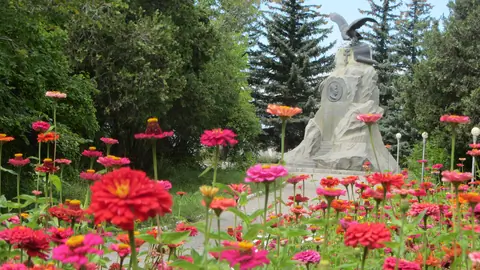
Nikolay Mikhailovich Przhewalsky was one of the first Russian Geographer who started studying in detail the geography, flora and fauna of the Central Asia. Beginning from 1870, he arranged 4 large expeditions to Mongolia, China, and Tibet.
During his expeditions, he revealed the exact directions of the mountain ranges and borders of the Tibetan Mountains. Przhewalsky collected an enormous zoological collection, which comprised several thousand of species of plant, animals, birds, fishes and insects.
Karakol
Kyrgyzstan
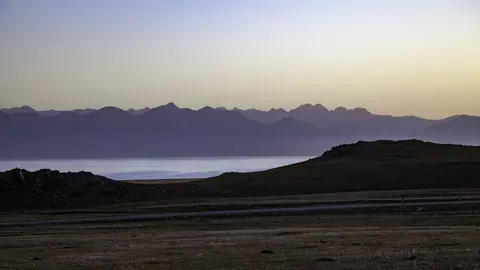
Nestled within the rugged beauty of the Kyrgyz landscape, Song Kul Lake, also known as Song Kul, emerges as the quintessential pastureland of nomadic life. Stretching over vast expanses, this high-altitude lake spans approximately 25 to 35 kilometers, its crystalline waters mirroring the azure sky above. As the beating heart of nomadic existence, hundreds of traditional yurts dot the landscape during the summer months, forming a transient village that echoes with the spirit of generations past.
Song Kul lake
Kyrgyzstan
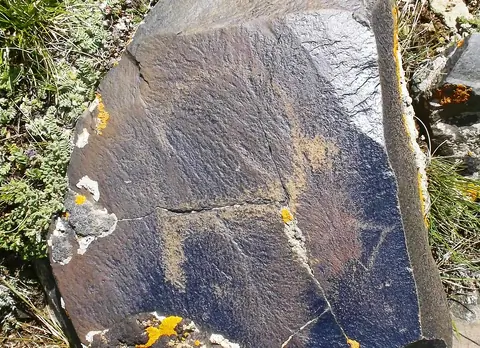
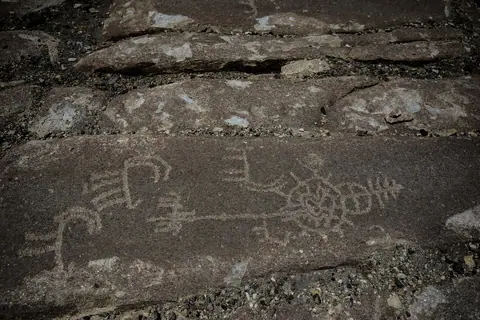
At Saimaluu-Tash there are many rocks of basalt. Paintings were drawn with iron and bronze instruments on the smooth surfaces of basalt, blackened by the sun.
The men scratched the scenes of life, hunting, displacements, ritual dances, different divinities, demonic dances, humanoid creatures with canine heads and hypertrophied arms.
Kazarman
Kyrgyzstan