Cities

Karaganda

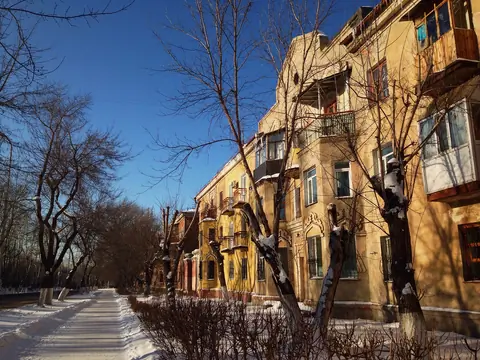
Karaganda is one of the largest cities in Kazakhstan and the administrative center of the Karaganda region. The city has a rich history, associated primarily with the development of the coal and metallurgical industries. Here is a brief history of Karaganda:

Foundation and early years: The city of Karaganda was founded at the beginning of the 20th century in connection with the discovery of coal deposits in this region. At first it was a small settlement, but with the growth of industry and the migration of labor from different regions of the USSR, the city quickly expanded.
Guliston

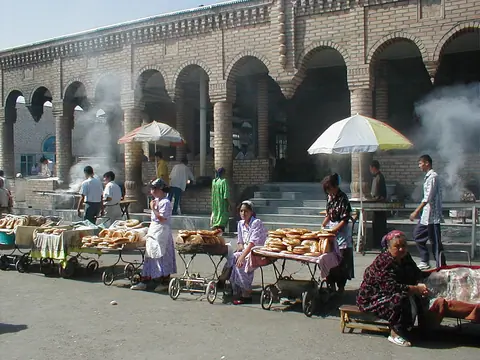
Gulistan or Guliston is a city of 100,000 inhabitants and it is the administrative center of the Syrdarya region in Uzbekistan. In Persia, Gulistan means the "land of flowers"

In the 19th century, the city developed on the village of Achchikkuduk ("a well with salt water"), in which there were 40 courtyards, there was a mosque and a tea room.

In 1869, by decree of the Governor General of Turkestan KP Kaufman, the possibility of irrigating the starving steppe was studied and in 1886 the construction of the great canal began.

Kostanay

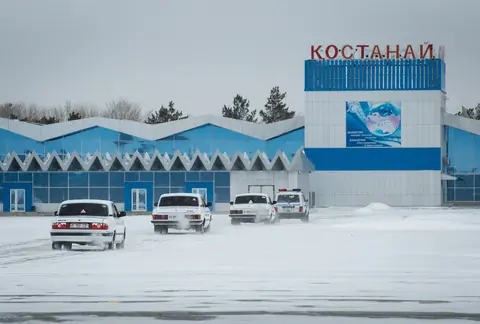
Kostanay is a large city in the northern part of Kazakhstan and the administrative center of the Kostanay region. The city has a rich history and is one of the important industrial and cultural centers of the region.

Historical overview: Kostanay was founded in the 19th century as a Kazakh fortress on the border of the Russian Empire. Over time, the city began to develop due to its position at the crossroads of trade routes and the rich natural resources of the region.

Baykonur

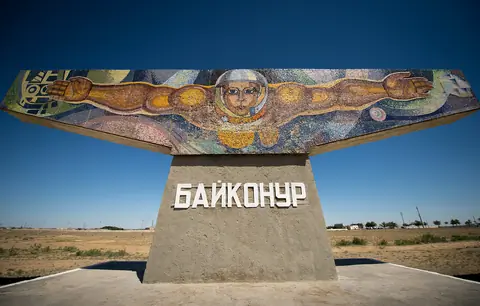
Baikonur is a famous cosmodrome located in Kazakhstan, which is of great importance for world astronautics. However, in addition to its cosmic glory, Baikonur and its surroundings also offer interesting tourist spots and have a rich history.

Foundation: Baikonur was founded in 1955 during the Soviet Union as a cosmodrome for launching rockets. Since then, it has become one of the most famous and actively used spaceports in the world.

Jizzakh

Jizak (or Jizzax / Jizzakh) is the administrative center of the Jizzakh region, a city of regional subordination of 180,000 inhabitants. A major transport hub, economic, scientific, educational and cultural center of the region. Located on the highway between Tashkent and Samarkand. It is also connected to these towns by a railway line. It is located on the northern foothills of the Nuratau Ridge, on the Sanzar River, in the southern part of the Mirzachul Steppe. It was founded in the 10th century, in an oasis rich in vegetation, as an important transit point on the Great Silk Road.

Qarshi

The city of Karshi or Qarchi developed from a colony which was established from the 7th century BC. It was then that defensive walls began to be built around the ancient city. The remains of the ruins of these walls were first studied by archaeologists in 1999.

There is evidence that the city at this time had the Sogdian name Navtak, which can literally be translated as "New Building". As part of the Greco-Bactrian kingdom, the city may have been called Eucratideus.

Qurghonteppa

Qurghonteppa is the third largest city in Tajikistan and the capital of Khatlon province. It is located in the Vakhsh Valley in southwestern Tajikistan, 119 km south of the capital Dushanbe. According to ancient sources, Qurghonteppa appeared during the time of the Kushan Empire and could be the ancient Levakand. These places were famous for the good arrows and a special breed of sheep. Archaeologists have discovered here pipes from an ancient aqueduct, wells made with bricks, fortress walls with towers.

Termez

Termez (or Termiz) is one of the oldest cities in Central Asia: it is over 2,500 years old. In 2014 Termez was awarded the Order of Amir Timur. It is located in the extreme south of Uzbekistan on the northern border of Afghanistan, an important passage between these 2 countries.